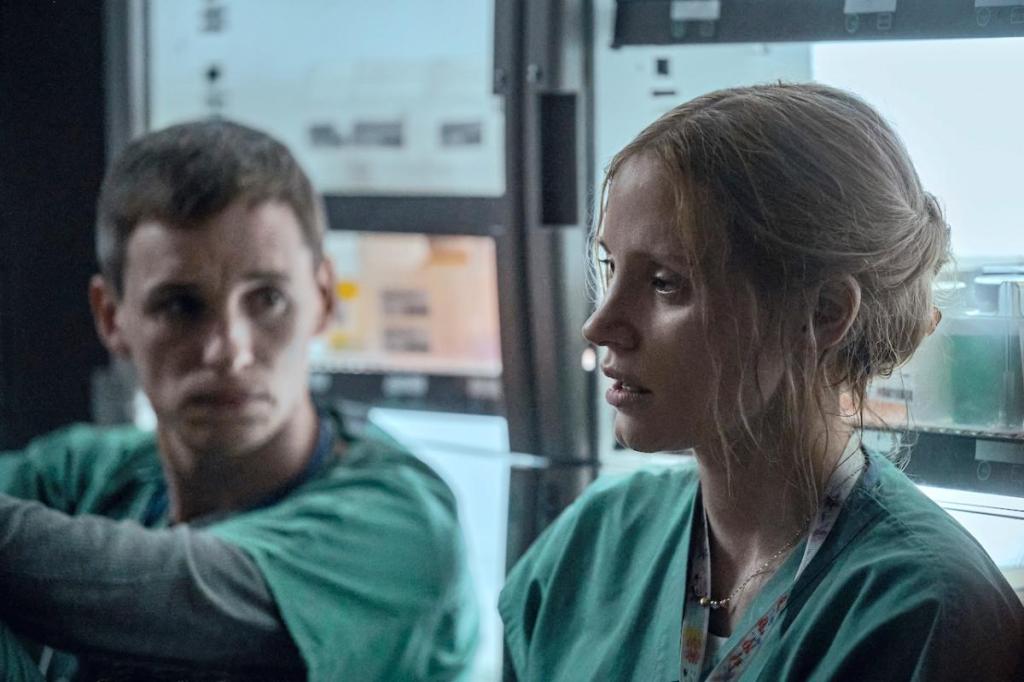
I was supposed to do write a review of Enola Holmes 2 -sequel to a film I actually enjoyed more than I thought I would-, but given that nobody tells me what films to choose, considering my time is much more limited than I want it to be, and, on top of that, I was not enjoying the film at all -too bloated and too keen on setting up another sequel or spin off to be good-, I decided to review something else, with the intention of getting back to Millie Bobby Brown’s passion project eventually -I probably will not, though- so, with hesitation I pressed play on The Good Nurse.
I did not feel this hesitation to watch the good nurse because of the cast, as both Jessica Chastain and Eddie Redmayne are more than capable, solid actors who -when they can contain themselves and not go on a “Look at me, I am acting, gimme an Oscar” show- can make up for the price of the ticket.
Also, I did not wonder whether to watch this film or not in terms of the quality behind the cameras, as Tobias Lindholm has shown his skills as director -in episodes of Mindhunter, The Investigation, films like A War, or A Hijacking- and as a writer, having worked in the script of The Hunt, and of Another Round (both films directed by Thomas Vinterberg). However, Lindholm’s credit in this film is only that of a director, which might have been a bad sign, had the script not been written by Krysty Wilson-Cairns, co-author of the scripts of 1917, and of Last Night in Soho, credits which made me confident she has what it takes to make a solid, remarkable film.
And indeed, The Good Nurse is a both of those adjectives -and some more thrown in for good measure, not all of them good though-. So why then did I feel so hesitant about it?
The origin of my indecisiveness towards The Good Nurse lies on the fact that the film is focused on the story of a real-life serial killer, which is one of the most prominent sources of entertainment in today’s pop culture… and I am kind of fed up with it.
Perhaps numbed by middle of the road films, angered by the true world that the more critical films show us (reality perhaps consciously or unconsciously ignored, or one we were not aware of), or maybe infantilized by the fantasy provided by superhero films and live action remakes of animation classics, designed to take us back to our childhoods, the fact is that the subgenre of the true crime fiction has seen a huge increase on its popularity as of late. Said increase is hard to explain considering this type of fiction presents us with morbid details, shocking stories, sometimes putting us in the shoes of the killer, leaving the side of the victims untold, once again voiceless.
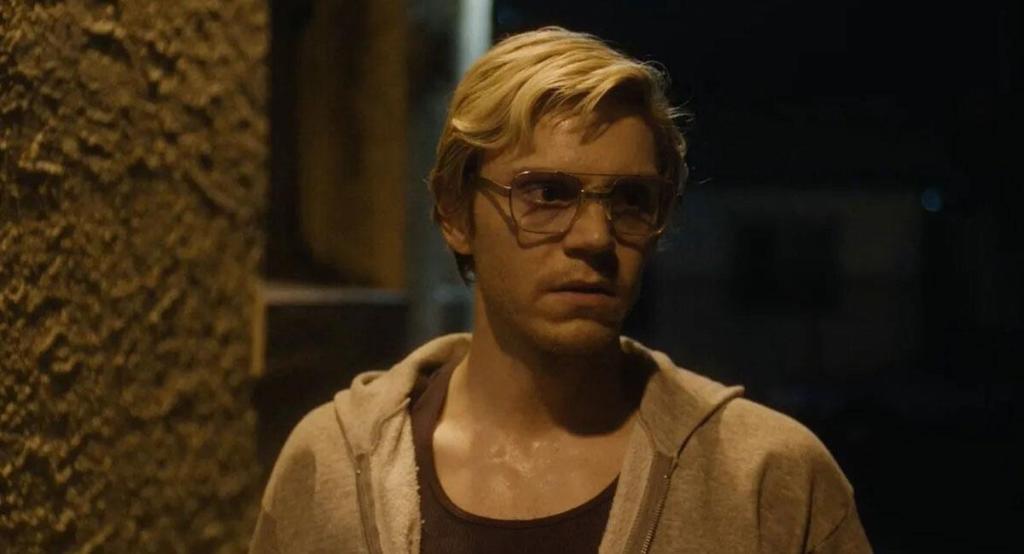
Personally, I do not have such a big problem with a film narrating horrifying events, but I do believe it is a complicated territory, as all stories should be told, but they should be told respectfully, especially when they portray real human beings being killed. I do have a problem with today’s obsession with true crime fiction, since that obsession has meant that we are surrounded with more and more stories, each one trying to be more memorable, scandalous, or violent than the one released five minutes before. Sensationalizing real events, perhaps making them up altogether, recreating the killings, focusing on the most morbid details for the sake of getting our attention (which is working, considering Netflix’s Monster has been viewed around 1 billion hours and has been renewed for two more seasons) has become the new normal. But leaving Ryan Murphy’s show behind -I wish I could, but it is on my Netflix homepage more often that I like, acting as a reminder that part of the streamer’s popularity has come as a result of its true crime documentaries, like Making a Murderer-, true crime films like Zodiac, Patty Jenkins’ Monster, My Friend Dahmer, Extremely Wicked, Shockingly Evil and Vile, Foxcatcher, and obviously The Silence of the Lambs, and In Cold Blood, (together with shows, books, documentaries and podcasts) are all the rage right in an abruptly changing zeitgeist, which might soon turn our attention to stories about stamp collectors.
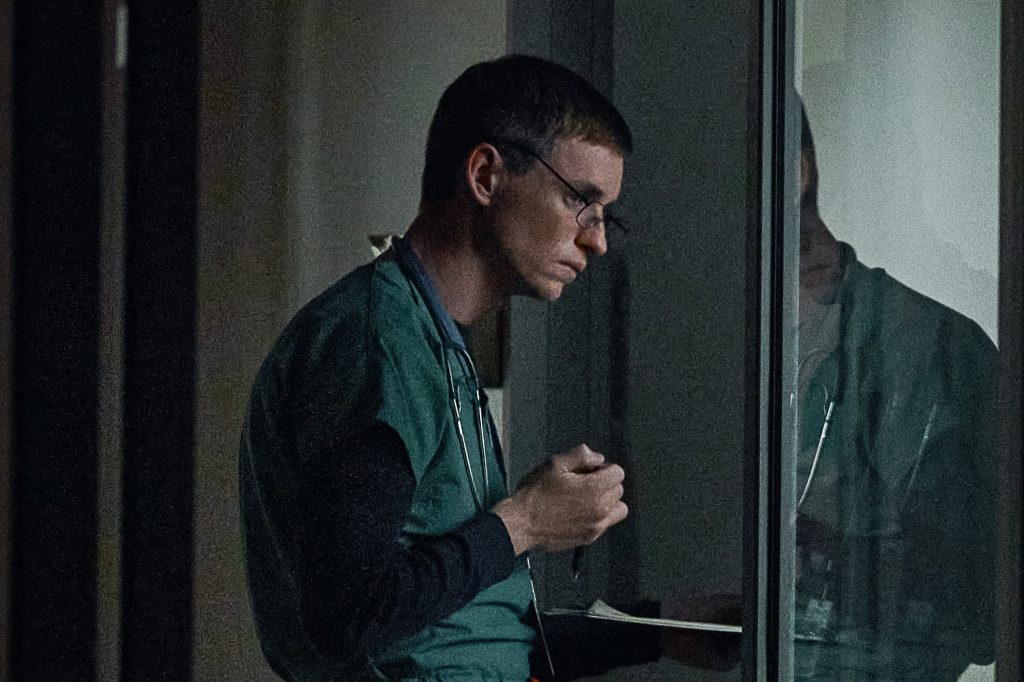
To the name of real life killers like Jeffrey Dahmer, Robert Durst, Ted Bundy, and plenty more which I will avoid naming, we have to now add Charles Cullen (portrayed in a fantastic job by Redmayne, capturing the duality of a man able to kill for no reason, but also hiding behind the facade of a meek person, unable to harm a fly), who used his job of a nurse, was able to kill, allegedly, hundreds of patients (though he confirmed around 40, more are believed to have been killed by Cullen) until his arrest in 2003. Before anybody could come up with the conclusion that a film with a title like The Good Nurse is going to have us in a front seat, witnessing the atrocities he committed, it has to be said that he is not the centre of our story here, being that the character played by Chastain.
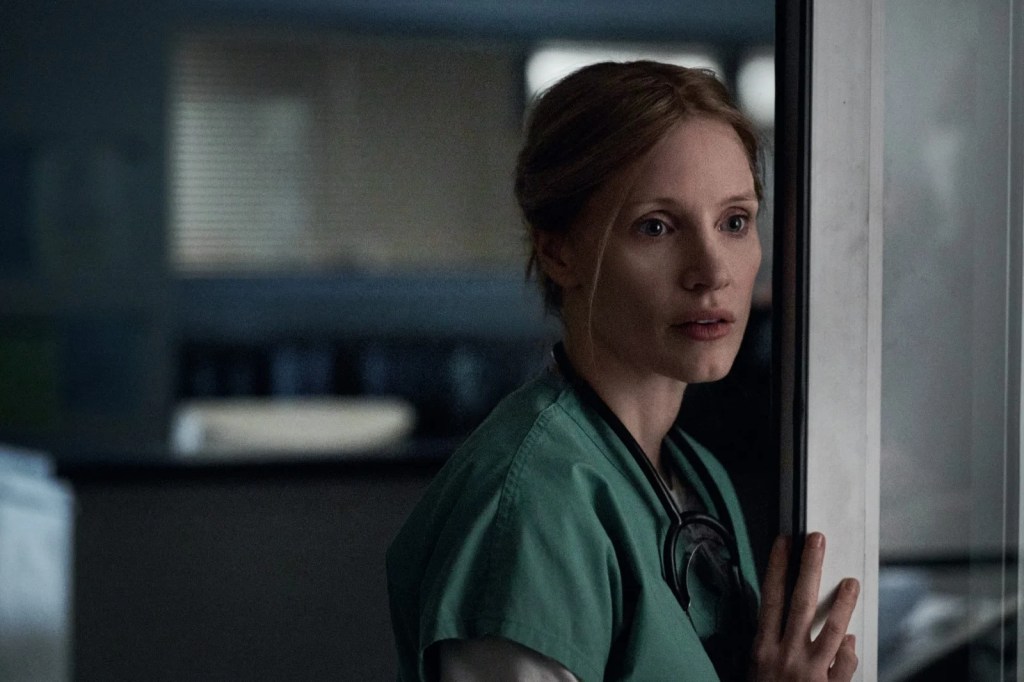
By placing the core of the story on Chastain’s character and on the fight to stop Cullen, the film manages to be a more dignified version of the events. Although it does not give much of a voice to the victims and their relatives, it is a welcome look at the true crime genre, a look that does not feel the need to show us a so-called human doing disgusting acts of violence (the killings in the film are never actually shown on screen). The only issue I have in mind is that, perhaps, because of its approach to the real-life tragedy and its avoidance of morbid details, it might receive less recognition than it deserves – in a way kind of what happens with nurses, who are never recognized, unless it is too late, or something terrible has happened.
If you can stand that the film moves ahead at a speed that is too slow for its own good, The Good Nurse is a more respectful, different perspective on the true crime fiction, but perhaps because of its more subtle approach, it might not be as remembered as other films of the same genre, like Henry: Portrait of a Serial Killer. Released in 1986, it was received with controversy and was heavily censored, it is still considered one of the best, and scariest representations of a serial killer on the big screen, perhaps because of its brutality, and a powerhouse performance by a then unknown Michael Rooker.
36 years later, we are still obsessed with serial killers. I, a person who does no have the kind of curiosity that makes a person glue their eyes looking at an ambulance by the side of the road after a crash, do not know how the true crime genre is going to evolve. I do fear films like The Good Nurse, which can separate between the need to tell a story of misery and the fascination with killing a human being, a film which knows its role is not to dwell on the morbidity of death and on the ones who kill, but instead to fight and do its best to show the ones who try to stop the deranged monsters.


You must be logged in to post a comment.