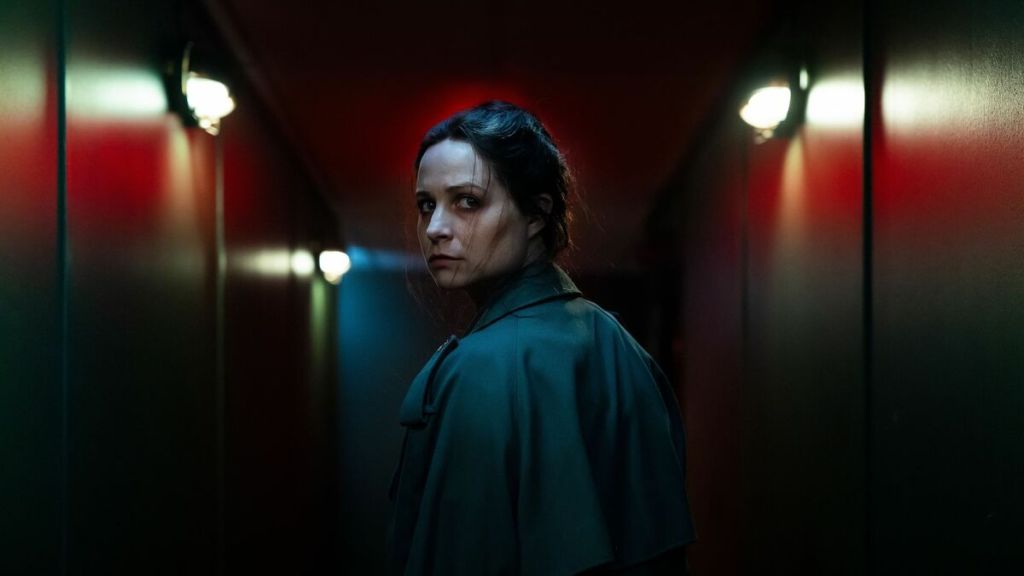
Paraphrasing the Encyclopedia Britannica, censorship can be defined as a change, suppression or prohibition of speech or writing which has been considered as subversive of the common good. From the David by Michelangelo to books like On the Origin of Species by Charles Darwin or To Kill a Mockingbird by Harper Lee and everything in between, censorship has affected art to a bigger or lesser extent. Cinema, of course, has not escaped scott free of the scissors of censorship, but most importantly for the sake of Prano Bailey-Bond’s film Censor, we must focus on a specific period between the late 1970’s and the 1980’s in the UK.
The introduction of video recorders in the 1970’s and an increase on the popularity of the horror genre lead to a fear that films might influence the public without the authorities being able to put an end to the situation. As a direct consequence, plenty of horror films were banned from the screen and video stores were raided by the police in search of dangerous titles- sometimes with too much fear and not a lot of care- such as Dolly Parton’s The Best Little Whorehouse in Texas, seized after being confused for a pornographic film.
During this time, films -some of them popularly known as the Video Nasties- with lovely and innocent titles like The Driller Killer, Cannibal Holocaust, I Spit on Your Grave, The Last House on the Left, The Evil Dead, Possession, Suspiria, Scanners, The Texas Chainsaw Massacre or The Thing were divided into three different sections and were banned, prosecuted and not released, or directly to home video -either to escape censorship from the BBFC or as a result of the lack of a big screen release- without much fanfare and distribution. Luckily for all of us, those days are over, and nowadays all of the films censored are available to be enjoyed.
However, as not everybody is a fan of the genre, one might think about what is like to be a censor; a person who might not enjoy the genre but has to watch horror films on a daily basis in order to decide if a dismemberment or a rape scene is fit to be seen by an audience. This thought -paired with an observation of what the job can do to their mental health- is central for the feature length debut of Prano Bailey-Bond, set in the Video Nasty period, in which Enid -played by Niamh Algar- works as a censor for whom the separation between reality and fiction starts to get blurred after watching a horror film that exacerbates her paranoia about the enigmatic disappearance of her sister.
Being a small film in which a terrifying villain constantly hunting the protagonist is nowhere to be found and there are no scenes ending up in a carefully choreographed climax of jumpscares that start with a harmless cat and end up with a disfigured inbred with an appetite for human meat, Censor relies on building up the tension by showing how the protagonist is drifting apart from reality and entering into a realm of nightmares. There is a constant sense of trepidation that never stops and it is magnified by the fact that the audience never leaves the side of the protagonist throughout the film, meaning that the reality she experiences is the one we get to see, except for a few shocking occasions in which we are able to witness what is really going on.
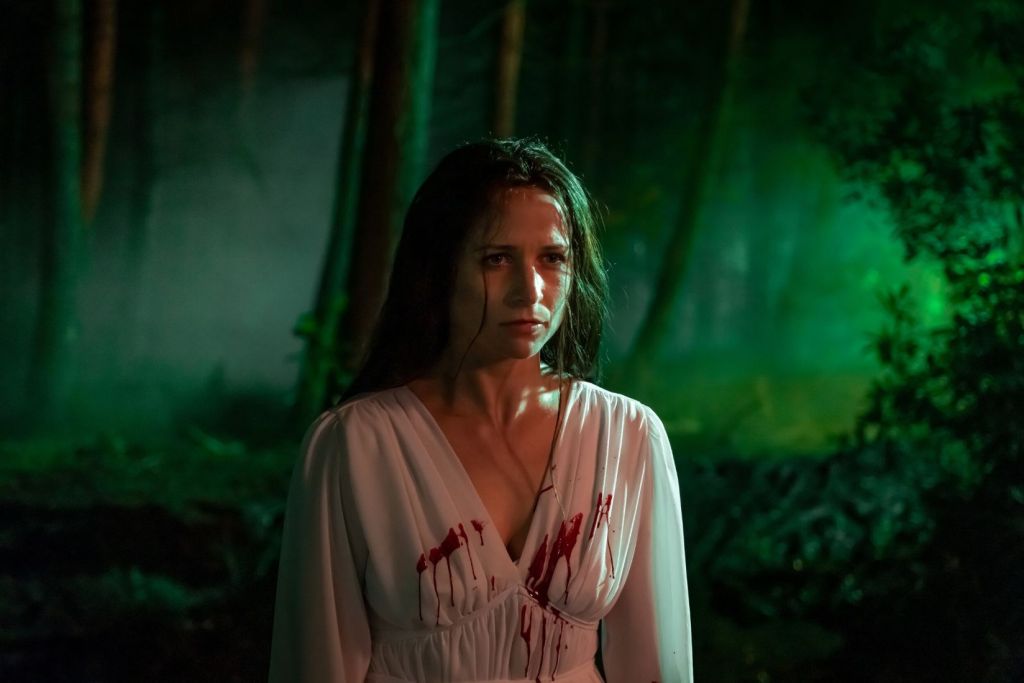
The fact that the story is told from the perspective of Niamh Algar’s character has allowed her to achieve a mesmerizingly haunting performance in a way that brings to mind what Morfydd Clark did in Rose Glass’s Saint Maud, not that long ago. This is not the only resemblance between Censor and Saint Maud, as, in addition to the great performances of Algar and Clark, both films share a well written and memorable female character whose life has been shaped by a past trauma, thus offering a welcome change in perspective in comparison with the trope of the final girl that has become extremely usual in the horror genre. In addition, it is impossible not to draw similarities between both Censor and Saint Maud in terms of pace, effectiveness and style (in fact the production designer -Paulina Rzeszowska- and editor -Mark Towns- are the same).
Furthermore, Censor can also bring to mind another film; Peter Strickland’s Berberian Sound Studio, in which a sound engineer (the always excellent Toby Jones) finds himself tormented while creating the sound effects for an Italian giallo film. In addition to the fact that Berberian Sound Studio is also a haunting and stylish film that allows the dread to transcend the screen and get into the skin of its audience, it -like Censor- shares the same interest of focusing a story on the inside of the filmmaking business, what goes on behind the camera, before the audiences can enjoy a film either at the cinema or at their homes.
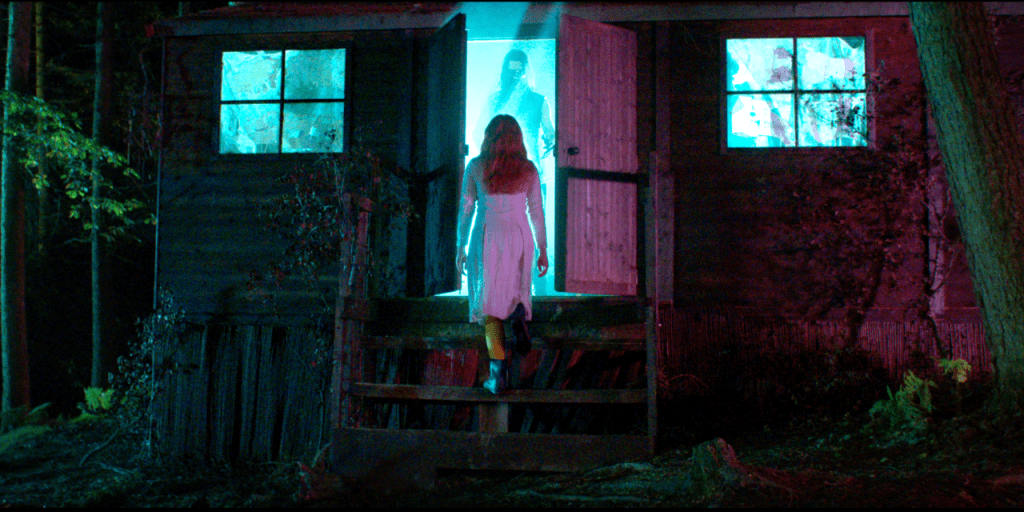
Censor is a film that is well worth seeing as a result of a combination of factors in the perfect measure. It is a reflection on censorship and horror, and it has been made in a way that would have raised some eyebrows had it been released in the heyday of the Video Nasties, back in the days of Mary Whitehouse. Also it is a neatly packed film that makes a superb use of a running time of a little bit under 80 minutes, going quickly to the nitty-gritty, increasing a feeling of fear and restlessness and not leaving much room to breathe. All in all -as it happened with the case of Rose Glass-, despite being Bailey-Bond’s feature length debut, it does not look like it, as she has managed to show what she is capable of with a sense of control that is proper of filmmakers with a much more extensive career, like the one she clearly has ahead of herself.
 The Neurotic Cinephile
You must be logged in to post a comment.