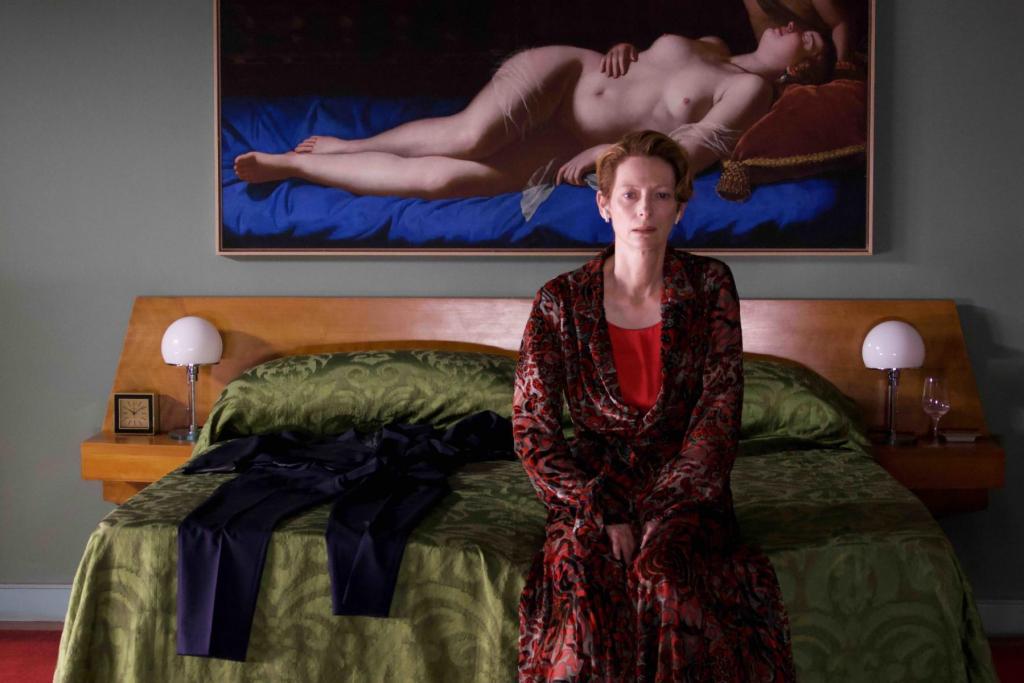
After Pain and Glory offered an earnestly intimate look at his own life -and the life of an artist by extension-, Pedro Almodóvar has returned with The Human Voice. Based on Jean Cocteau’s play La Voix Humaine, the Spanish director has crafted a short film in which we follow a woman -played with gusto by the glorious Tilda Swinton- who, after being abandoned by her lover, wanders aimlessly in her luscious apartment until his arrival to collect his belongings and his dog.
Although this is Almodóvar’s first film in English, it is not the first time that the director has used this play in his filmography. In La Ley del Deseo (Law of Desire) he used the text as a play within the film, performed by one of the characters -portrayed by Carmen Maura-. Then one year later, in 1988, in Mujeres al borde de un ataque de nervios (Women on the Verge of a Nervous Breakdown), Maura portrayed again the lead role of the story. The key difference was that Almodóvar had written a script with Cocteau’s play as the basis but, instead of centering the film around only one character and her monologue, he turned the story into a black comedy, with additional characters and infused more of his personal style to create one of his most recognizable films.

Films like ¿Qué he hecho yo para merecer esto?, Todo sobre mi madre or Volver -among many others- are some of the best examples that illustrate the importance of female characters in Almodóvar’s career. In them we can see women who are different, free, fierce and fearless; women who might make mistakes, but find the strength to carry on living; women who have adapted to the society of their times -having also suffered the consequences of doing so- and can be seen as timeless influential figures. Actresses like Carmen Maura, Victoria Abril, Penélope Cruz, Cecilia Roth and Chus Lampreave are only a few of the ones who have portrayed in several films what is known as the “chica Almodóvar” and, the addition of Tilda Swinton as his latest female protagonist is nothing less than a perfect choice.
Although this is far from being a discovery -as usually her talent is more than enough to make any film worth seeing-, Tilda Swinton demonstrates she is impeccable in the role of an abandoned woman on the verge of collapse, unable to put her life back together. Gliding from one beautifully appointed room to another -and furnishing them with her charisma-, she portrays the different contradictory sides of her character. She is human and alien, passionate and distant, vulnerable and relentless. Having Swinton as the unique protagonist reinforces our sense of identification with her character at the same time that it allows her to showcase her talent by going through all the emotions available, sometimes even in the same shot. Furthermore, it also enables Almodóvar to successfully put the spotlight on Swinton, avoiding scenes going back and forth her and her former lover -to the extent that we do not even get to hear his voice-, and replacing them with her masterful and changing reactions to the conversations.
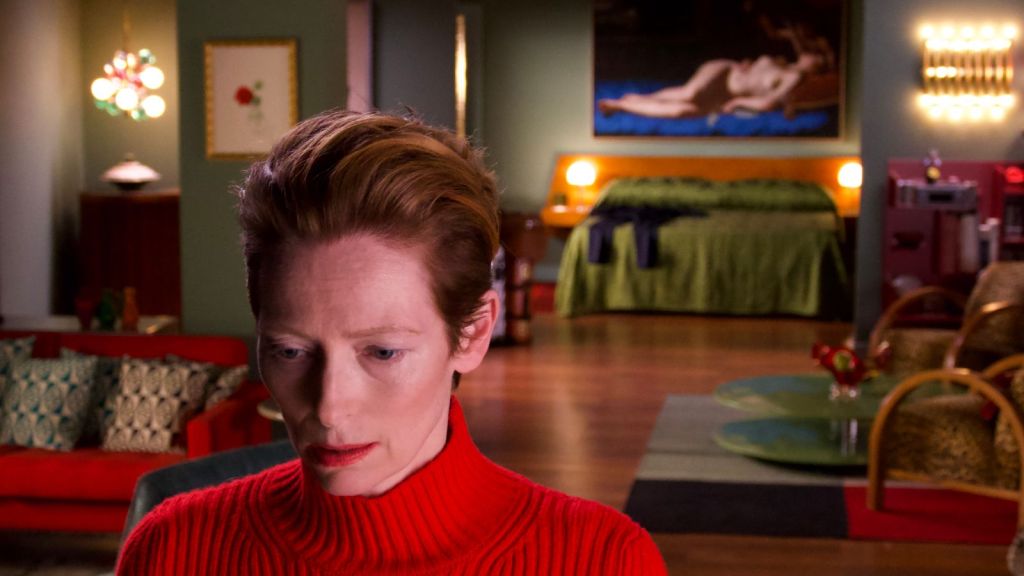
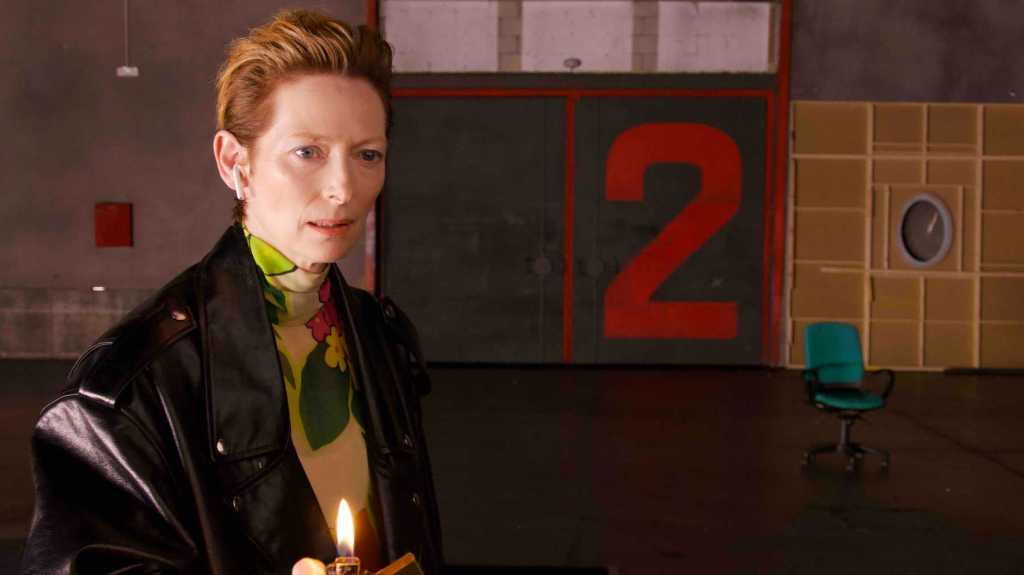
The Human Voice can be seen as a story of broken love, a story of revenge -in fact we first meet Swinton’s character purchasing an axe, and there is a copy of Kill Bill among her DVD collection-, nevertheless, it is much more than that. Almodóvar’s interest goes beyond an exploration of the consequences of a painfully unexpected breakup. The initial theme of the separation and the loss of touch with those we love is developed into an exploration of the divorce between us and the real world. Furthermore, in a wonderfully original use of the play-like quality of the film, Almodóvar has set her flashy apartment within the confines of an empty warehouse to increase the sense of detachment with reality, while simultaneously illustrating the notion that appearances can be deceitful and useless, but sometimes they might feel as the only thing we have left.
The combination of Almodóvar’s precise direction with the cinematography by José Luis Alcaine -frequent collaborator with the Spanish filmmaker- creates an atmosphere that makes the audience feel as voyeurs following Swinton’s character as she deals with her emotions, watching a study on broken relationships where there is no corner unexplored, no room where the camera cannot access. However, the final result is far from being a cold, distant character study, as despite the short length -less than 30 minutes-, Almodóvar has crafted a film that feels like a condensed version of some of his most notable films to date. As in many of them his idiosyncratic style is palpable, as is the attention to detail in the beautiful apartment and in the equally exquisite and colorful wardrobe and an outstanding soundtrack by Alberto Iglesias.
The decision to adapt Cocteau’s text into a short film has turned out to be a successful choice on several complementary levels. Initially, the re-adaptation of the original play has allowed Almodóvar -now in a more introspective period in his career, as exemplified by Julieta or Pain and Glory– to craft an intimate film that feels both faithful to the original source and to the Spanish director as it explores themes like love and loss. In addition, The Human Voice proves once more Almodóvar’s talent and his endless evolution as a filmmaker who remains faithful to himself at the same time that is open to change, as the final result is a beautifully made, slow burning film that can be seen as a mature and subtle revision to some of his earlier works from a less subtle and quiet period in his filmography.


You must be logged in to post a comment.