Whodunits are all the rage as of late. Whether as a result of increasing restrictions due to Covid-19 (for this kind of films the number of locations can be limited and the cast might be larger, but their interactions can be easily regulated), or as one of those trends that come and eventually ends up disappearing into the ether, the fact is that fans of crime fiction have had the chance to enjoy films like Murder on the Orient Express, Death in the Nile, Knives Out (which will be continued with its upcoming sequel Glass Onion), and TV shows like The Afterparty, or the wonderful Only Murders in the Building, -in no particular order whatsoever- some of most recent examples of a genre built by authors like Edgar Allan Poe, Arthur Conan Doyle, Raymond Chandler, and Agatha Christie.
It is perhaps Christie, nicknamed the “Queen of Crime”, who we should consider as the most relevant and influential figure, both in literature and in film, to the extent that it is impossible to think of a whodunit and not imagine classic elements like a group of characters with more or less motifs to kill -most of the time a despicable person who is begging to get the chop-, one or more assassinations, a wrongly accused murderer, plenty of clues that are explained at the end… usually in a beautiful mansion in the English countryside (full of clichés and cups of tea which may or may not be poisoned), as whodunits generally follow a double narrative, meaning that one part of the story remains hidden until the third act reveal.
Taking aside anything involving Hercules Poirot and Miss Marple -Christie’s most famous characters-, we must mention her long-running play, The Mousetrap (which ran non-stop in London’s West-End from 1952 until today, taking aside a break from March 2020 to May 2021 as a consequence of Covid-19). This play, originally performed by Richard Attenborough, is at the centre of Tom George’s See How They Run, which, although does not deconstruct the genre like the aforementioned Rian Johnson’s Knives Out, it is a worth-watching piece of old-fashioned entertainment.
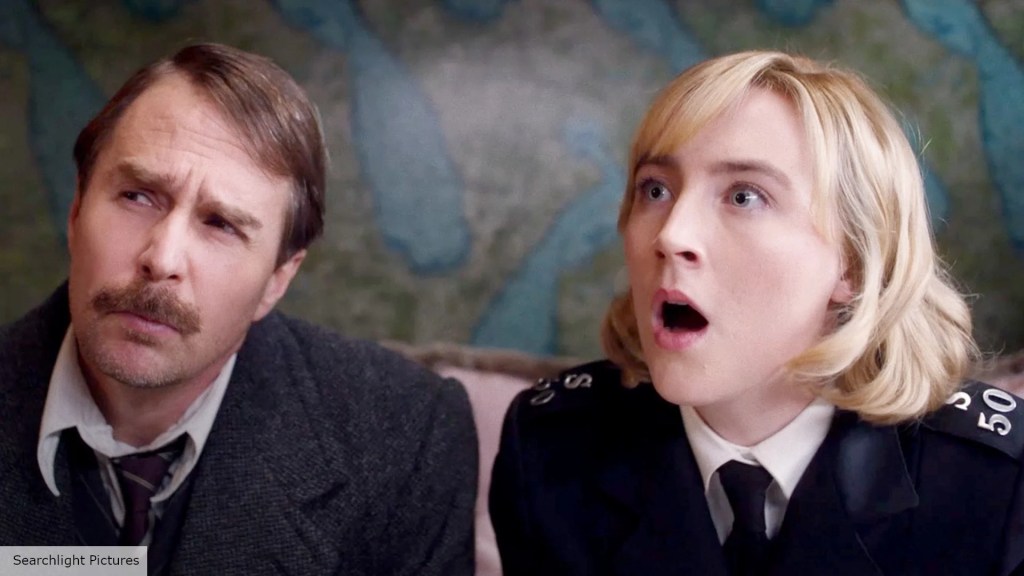
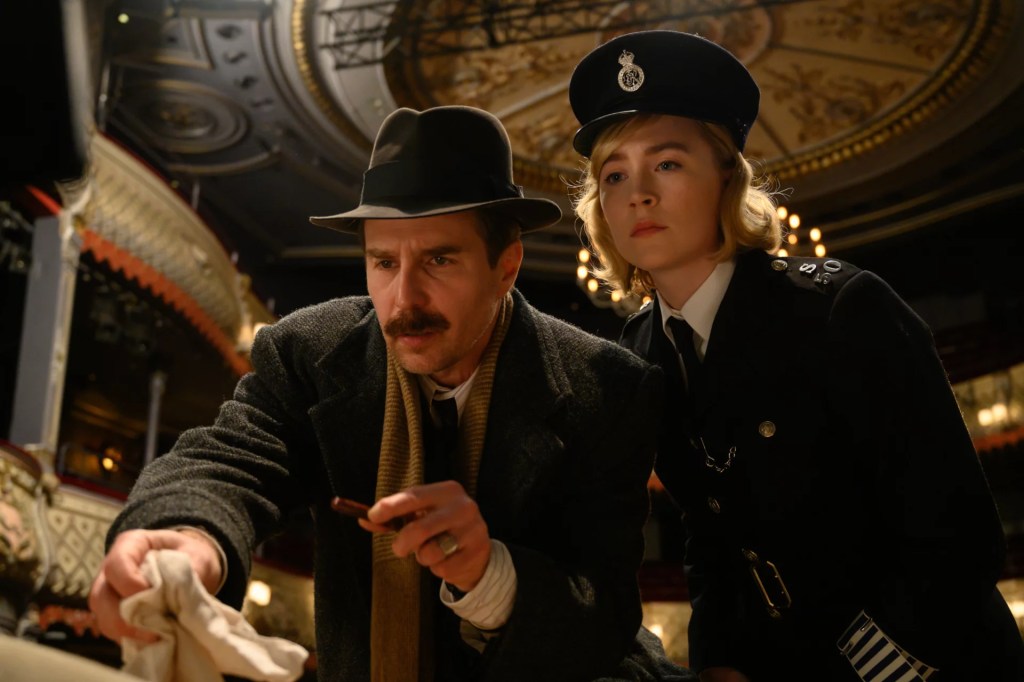
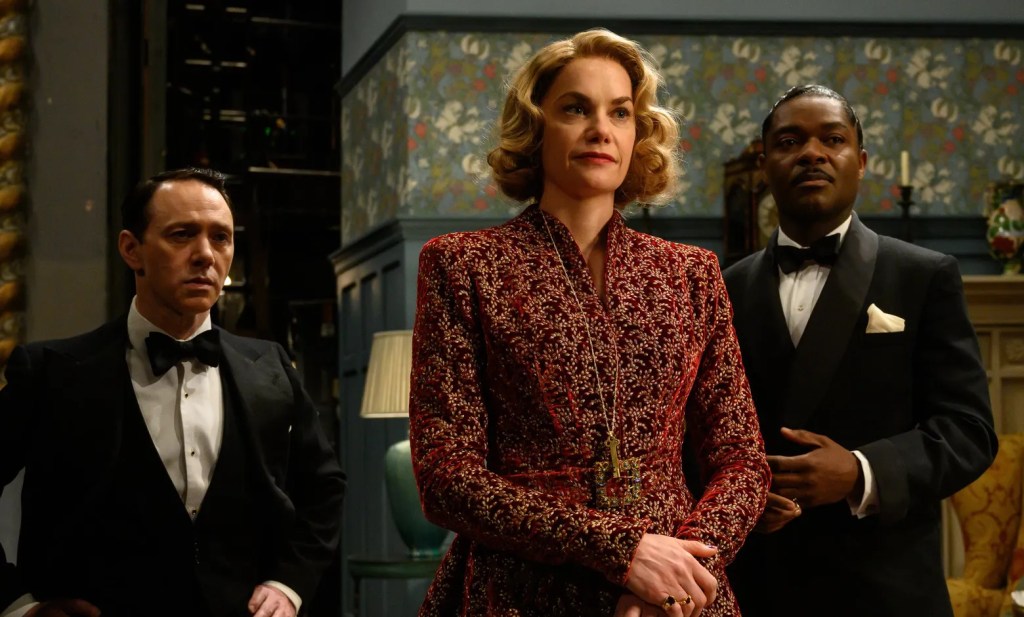
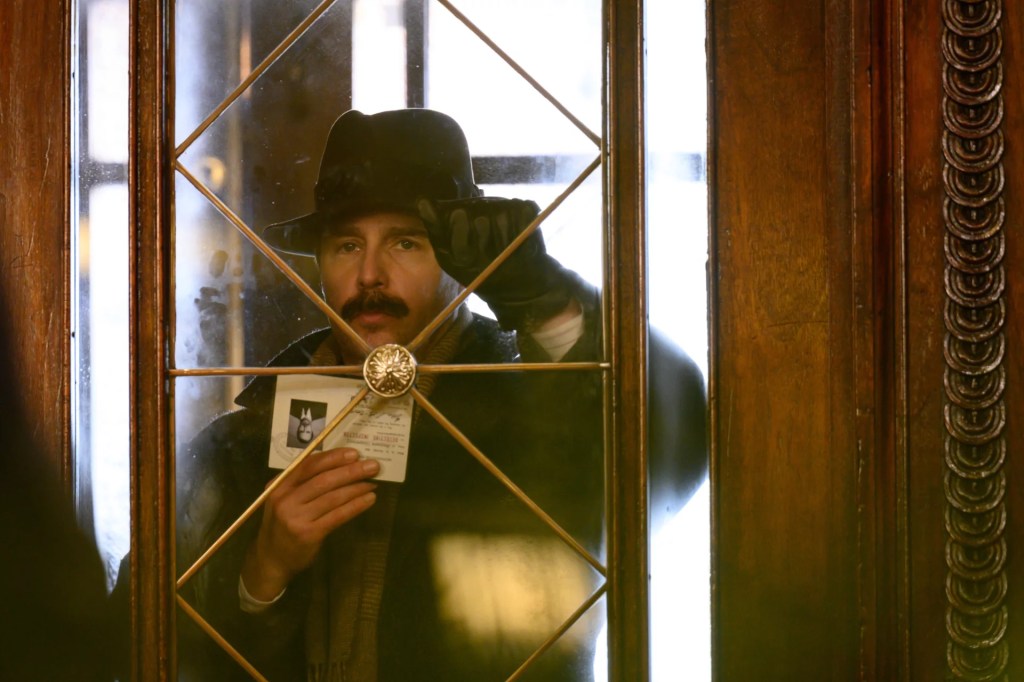
Set in London in the 1950’s, See How They Run places us around the celebration of the hundredth performance of Christie’s The Mousetrap, which is soon going to be adapted to the big screen by a director, Leo Kopernick, -played with bravado by Adrien Brody-. However, he gets killed, Inspector Stoppard (Sam Rockwell) and Constable Stalker (Saoirse Ronan, the film’s MVP) start to investigate from a list of suspects including a writer -David Oyelowo-, a producer -Ruth Wilson-, and real-life figures Richard Attenborough and John Woolf, played respectively by Harris Dickinson, and Reece Shearsmith.
Looking at all the performers involved, See How They Run follows on the footsteps of other whodunits before with a fantastic cast – maybe not as impressive as the one in any of the recent Kenneth Branagh’s Poirot films, or in the 1974 adaptation of Murder on the Orient Express, but quite good on its own right. Despite the talent of all the other actors, Saoirse Ronan, stands out head-and-shoulders above the rest, as she is the one who embodies the energy and enthusiasm of the film. She is the one that brings that extra something to the film, in a way that reminded me of Ana de Armas’ performance with Daniel Craig in the aforementioned -yet again- Knives Out. However, whilst Rockwell has believable chemistry with Ronan, and Brody does more than enough with his small role, on the other end of the scale, Shearsmith, Wilson and Oyelowo were not given a lot to do, being underused merely as pawns to move parts of the story forward. Furthermore, although, a certain actress does a decent, albeit brief, job as a famous figure relevant to the whodunit (not saying more, because of spoilers), Dickinson failed to embody Attenborough, being -at least to me- the weakest link in the whole ensemble.
All in all, whether they are better or worse, their performances manage to hold the film together, as the main issues in See How They Run, are found both in the direction and script.
See How They Run / Searchlight Pictures
Despite a short duration -a bit more than 90 minutes-, the film feels too conventional, visually unexciting -the most eye-catching element is the use of split screen in some scenes, which not always pays off-, and too much like a TV show (George’s previous work was all for television) to be engaging, or memorable. To make matters worse, the breezy nature of the script (by Mark Chappell) is wasted on a repetitive structure, that reduces the interactions between the characters (whose development is limited to only the information that is relevant to the case), and will certainly make you stop guessing the identity of the killer, as you will have lost interest on the crime and the investigation way before an ending that is too convoluted and conventional for its own sake, thus wasting an interesting plot twist that, despite being original and fitting, seemed developed at the eleventh hour.
Nevertheless, despite these flaws, there are a few scenes in which -at the risk of getting too meta- the characters discuss certain elements of a whodunit, adding a welcome layer of self-awareness that suits the more comedic elements of the film whilst winking at the audience who is -too- familiar with this genre.
It is this familiarity, this sense of “been there, done that”, which can make See How They Run get lost in a crowded sea of whodunits. But, if what you are looking for is a more conventional film with a taste of the old times, and with the added bonus of a fantastic comedic performance by Saoirse Ronan, this will fit the bill quite nicely, after all, in the words of the film’s character Leo Kopernick: “It’s a whodunit, you’ve seen one, you’ve seen’em all”.
In all honesty, taking aside some wonderful and bolder examples, he is speaking the truth.
See How They Run / Searchlight Pictures
 The Neurotic Cinephile
You must be logged in to post a comment.