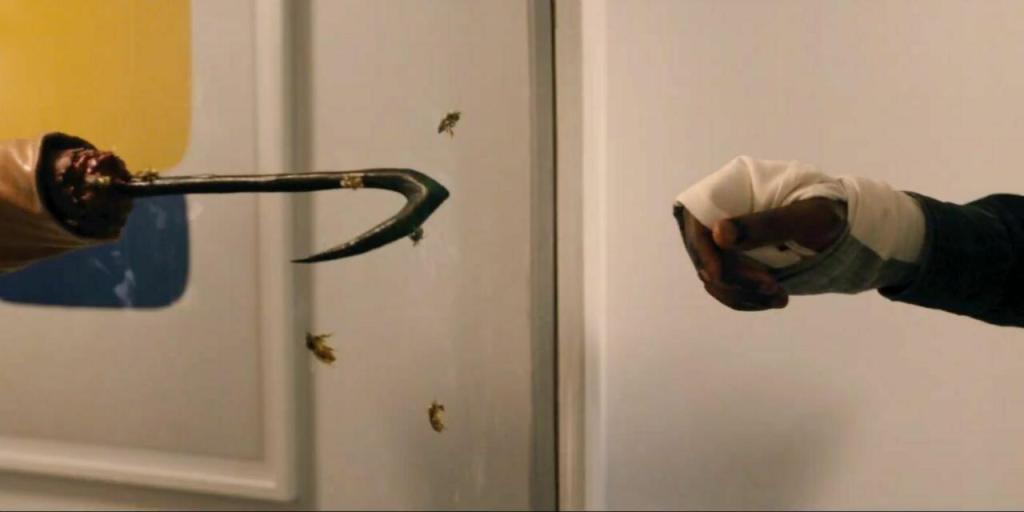
A few years ago, when we still had the chance of easily going anywhere in the world and we could not even imagine what was about to come, I spent a couple of weeks travelling around Poland. Before setting off to Krakow, I joined one of those trips with a local guide who proceeded to show us every nook and cranny of Warsaw. Walking around a neighbourhood while listening to him describing how a large part of it had been built using the rubble of the bombed buildings, made us comprehend the devastation suffered after the bombings of 1939. Thanks to the stories told by the local guide we became aware of the scale of a dark chapter of history that feels impossible to forget.
People change, neighbourhoods and cities too, but in spite of the calm and redesigned surface, pain and suffering still lie beneath. In order to know where we come from and who we used to be, we keep telling stories to ourselves. Stories that will help us remember our past, stories that might come as a result of a trauma that has not been properly dealt with, but badly buried instead, meaning that history as a whole can be doomed to repeat itself. A city like Warsaw will always be shaped by the hideous bombings of 1939, in the same way that a neighbourhood like Cabrini Green will always have traces of its origins, no matter how changed it might be now.
Obviously for those familiar with the character, Cabrini Green is home of none other than Candyman. However, originally, the character created by Clive Barker in the short story The Forbidden was supposed to haunt the residents of a fictional housing development in Liverpool named Spector Street Estate until Bernard Rose -who directed the original Candyman and Immortal Beloved– decided to move the location to the infamous public housing projects of Chicago. This change allowed him to explore racial inequalities, resulting in a generally well regarded film by horror fans and cinephiles alike. Part of the success of the original film lies on the fact that it is set in a real world in which one can find bigger threats than its terrifying villain. The ubiquity of crime, drugs and lack of care from authorities -which left the complex to its own devices- led to a reality in which a fictional figure like Candyman -born out of racism, violence and hatred- could prevail. On the other hand, the closeness between Cabrini Green and Downtown meant that what originally started life as an area in which low income families could live, has been demolished and redeveloped into a modern neighbourhood to accommodate a wealthier plethora of residents, in what can be described as a flagrant exercise of gentrification.
The effect of this change within the realm of the film -aside from the obvious demographic displacement- is that the days of the Candyman appear to be long gone, as nobody seems to be aware of his myth. Indeed, new residents like Brianna -an outstanding and believable Teyonah Parris- and her boyfriend -Yahya Abdul-Mateen II, in yet another skillful performance- do not know the story of Candyman until a casual conversation about wine leads them to discuss the evolution of the neighbourhood, which Brianna pithily summarises by saying that “White people built the ghetto and then they erased it when they realised they had built the ghetto”. At this point, Brianna’s brother Troy -a great, yet underused Nathan Stewart-Jarrett- narrates the story of Helen Lyle in her quest to uncover the myth of Candyman. However, the events seem to differ from what we know from watching the original film, as, according to Troy, it was Helen who, after losing her mind, mutilated a dog, kidnapped a baby -named Anthony McCoy- who luckily survived, being rescued by the neighbours of Cabrini Green.
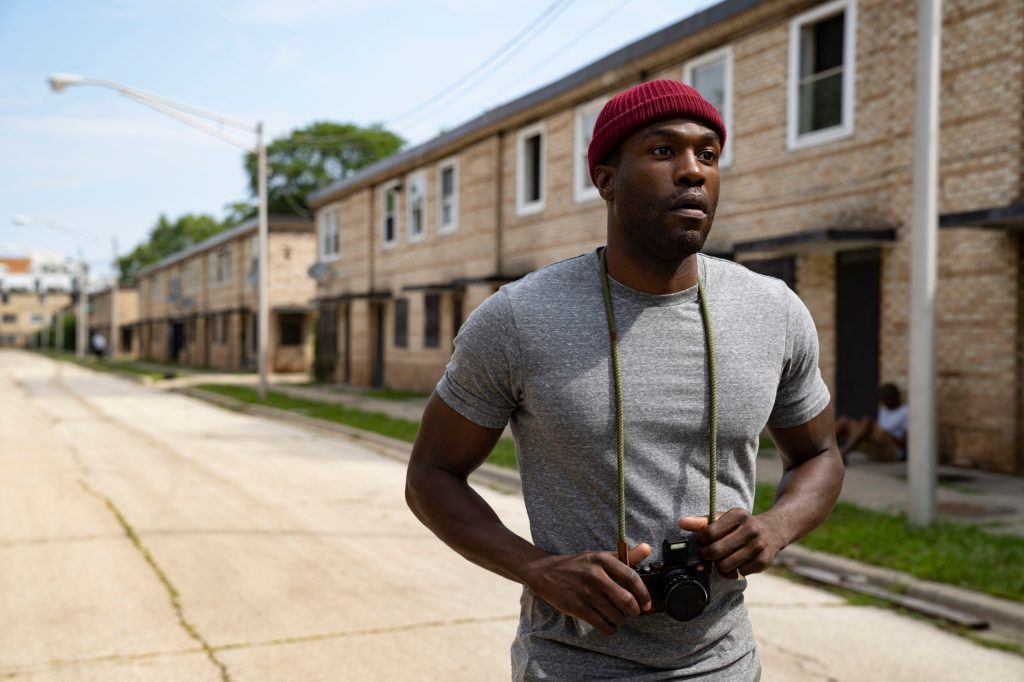
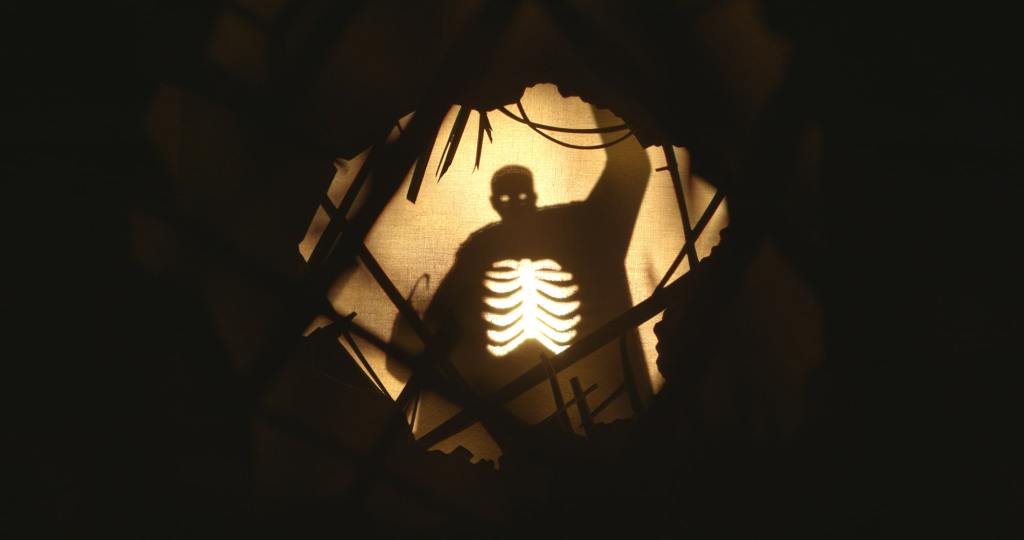
As a result of the violent character of the story -which comes to life thanks to the ingeniously beautiful yet violent use of shadow puppetry- it is easy to understand why Brianna feels unsettled by what she has just heard, as well as why her boyfriend feels intrigued by it and decides to investigate on his own. However, before developing any of that, the script -by DaCosta, Jordan Peele and Win Rosenfeld- starts to expand its connection with the original film as we learn that Brianna’s boyfriend is none other than Anthony McCoy himself. Despite this, he has no recollection whatsoever of his direct involvement with Candyman and continues his research by going to the abandoned town houses on the original housing project which still have not been demolished. The decrepit buildings, covered in grafitti and empty streets represent an immediate link to the past for him, especially after his encounter with Burke -played with a powerful solemnity by Colman Domingo-, who then proceeds to narrate his very own experience with Candyman (which had already been introduced in a brief prologue set in 1977).
The fact that all of that has taken place within the first 20 minutes of a film that clocks in around 90 minutes, could make anybody think that the rest of Candyman is going to be a quick, disposable horror flick with the sinister killer on a murderous rampage. Nothing could be further from the truth as we follow McCoy down the rabbit hole of his obsession with the killer, which is inspiring him to create countless paintings as if he were in some kind of a trance. The main result of this decision is that there is space in the script for it to delve into the role of the artist as the one who can give voice to those who were formerly silenced -McCoy makes a living as a painter, as Daniel Robitaille used to do before he was killed and transformed into Candyman-, and also there is plenty of room for Candyman to show up and kill anybody who has summoned him. But, while the killings might put off some viewers, that is nothing but fiction and this brutality pales in comparison with the portrayal of the terrifying reality that takes place in the actual world, making the film an eerily faithful representation of the horrors of what it is to be a black person, which is far scarier than Candyman.
Without entering into spoiler territory -although Candyman appears in promotional images and trailers-, it has to be said that his different aspect is used here to make him an indelible name written with blood for those whose identity has been forgotten; a memento of the horrors of being black, a physical manifestation of the persistence of trauma. The repetition of hideous acts is exemplified by a Candyman that feels new whilst still being familiar. Things change but they remain the same. No matter that the neighbourhood had been demolished, as the new shiny buildings are on top of a layer of repression, discrimination and fear.

It should be clear at this point that Candyman goes beyond the territory of a more conventional horror flick, and although the eponymous villain has his fair share of screen time, it is used to take what we already know from the original film and expand it -which is helped with the presence of Tony Todd and Vanessa E- Williams reprising their roles-. There is not an abundance of individual setpieces that make us sit afraid at the edge of our seats, though this did not seem to be the initial intention of those involved in the film. Instead, DaCosta -with a flawless cinematography by John Guleserian and a chilling soundtrack by Robert Aiki Aubrey Lowe- handles the constant, yet increasingly tense atmosphere with a great deal of efficiency, confidence and talent, cleverly playing with our anticipation and, thanks to the clever use of perspectives, we are made aware of what is happening, but not always as complete witnesses of the hideous acts that are taking place, thus imagining what is actually going on in our minds.
Candyman has always relied on the power of stories, our necessity to remember them as well as our impossibility to repress anger, trauma and fear. Thankfully, DaCosta, Peele and Rosenfeld’s script captures that essence and helped by DaCosta’s directorial know-how, Candyman is a visual feast from the very beginning (with those opening credits that are a perfect complement to the ones in the original film), right up to its end (in which we get to see through the use of shadow puppetry some of the monstrosities human beings are capable of). Successfully juggling both its role as a horror fest with an in depth study of racism and social inequalities, Candyman pays respect and reinvigorates the character, bringing it back to make us remember not to turn a blind eye to pain and suffering.
 The Neurotic Cinephile
You must be logged in to post a comment.