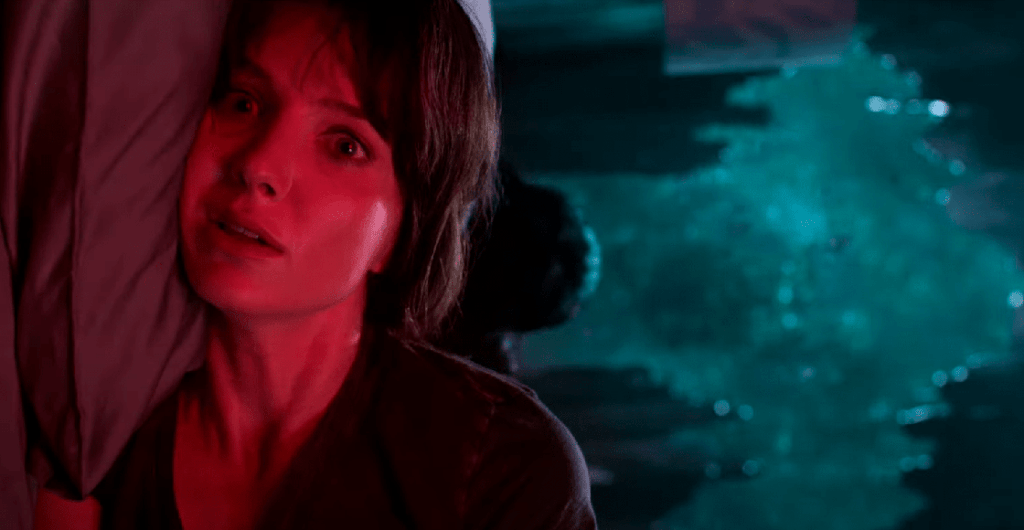
James Wan made a name for himself with Saw, a low-budget film, that thanks to its originality, twisty plot and gory scenes managed to span countless sequels, which focused too much on torture scenes and excessive twists, neither of them functioning as the original had done. Some years later, with Insidious and The Conjuring, Wan reinvigorated the horror genre by bringing back a more classic approach to what a horror film should be. Gone were the gory scenes and the twists that he used for Saw. Also gone were the quicker editing and fast-paced direction, replaced by a more mature and perfectly choreograph style instead. Both films feel carefully made, with the passion and knowledge of a fan of the genre who clearly is aware of what he is doing at all times, they are scary but not by an excess of shocks and jumpscares, but by creating a tense atmosphere that surrounds you and sends chills down your spine.
In between directing the slightly inferior sequels to both films –Insidious: Chapter 2 and The Conjuring 2, respectively-, and much to the surprise of his fans, Wan made Fast & Furious 7 and then he continued his foray outside of the horror genre with Aquaman. His 2018 adaptation of the DC comics, starring Jason Momoa, was a well received success, which meant that a sequel was greenlit, putting Wan in the director chair once again. Therefore, when the news broke that before Aquaman and the Lost Kingdom he was going to make a return to his horror roots, fans everywhere rejoiced.
Malignant hits the groud running and immediately takes us to a research hospital, where Dr. Florence Weaver -played by Jacqueline Mckenzie- has to try and harness a patient, named Gabriel, who has become uncontrollable due to his super powers. Cut to the present day Seattle, where Madison Lake -Anabelle Wallis- is trapped in a loveless marriage with her violent husband who seems unable to be with her after she had been through two miscarriages. After a fight, a violent incident takes place which then leads to a series of crimes that seem to connect Madison with the mysterious Gabriel. Thankfully for the triumph of the film, Wallis manages to be convincing enough to handle the shifts in her character -although she is not that convincing to make us forget that wig-. By the end of the film she fully embodies Madison, which is more than can be said about the rest of the cast, as none of them has been given neither too much to do nor an actual character to work with -beyond a name or a charmless quirk there is nothing else-.
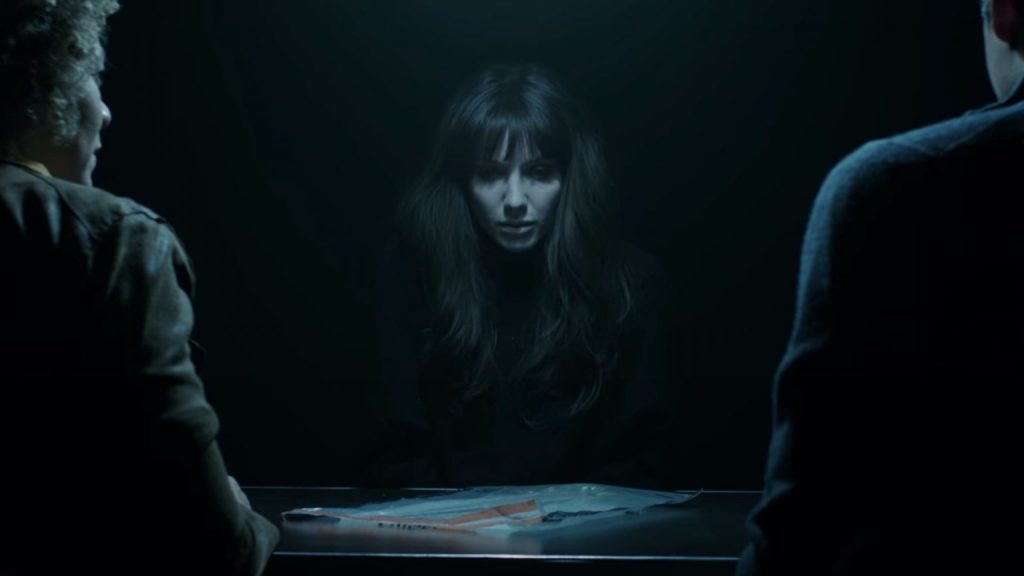
The script by Akela Cooper, based on a story created by Wan and Ingrid Bisu -his wife, who also appears in a small role as a member of the police department-, does not hide the fact that Malignant is influenced by the giallo, which became highly fashionable in the second half of the the 1960’s and reached its pointy peak in the following decade. Mario Bava’s The Girl Who Knew Too Much has been commonly acknowledged as the film that initiated a genre that owes its name to a series of crime novels -by authors like Agatha Christie, Raymond Chandler, Edgar Allan Poe or Edgar Wallace- translated and published (all of them with a yellow cover, hence the giallo term) in Italy under the name of Il Giallo Mondadori. As the novels that inspired its name, giallo films are usually centered around a series of grisly murders and the following investigation to capture the killer. Although sometimes said killer had some kind of supernatural powers, what most of the giallo films shared was a prevalent use of violence, blood and gore to portray the hideous -and some may say- original killings. In addition to the over top violence, there were some films in which the audience was put directly in the perspective of the killer in what can be described as a supreme evidence of a voyeuristic tendency.
By putting Wallis’s character right there as the crime scene unfolds in front of her eyes, she finds herself unwittingly connected with the crimes, and we -as the audience- get to see how the gruesome murders are being committed with a certain over the top panache and skill that bring back the heydays of the giallo, updating them for the current generation of filmgoers, as Wan triumphantly uses his directorial skills to breach the gap between classic and modern horror. As a result, Malignant is neither a jumpscare fest nor a fast-paced horror film. In an exercise of precision -except in those lighter moments that are a relief for those who might need a breather, but are in fact a source of exasperation, not bringing anything to the film, only stopping it dead in its tracks-, Wan sets the scene and elevates the stakes for the characters, and as the gory deaths start to increase, so does the sense of tension on the audience before culminating in an insane third act.

Much could be said about the final section of Malignant, however, since most of that would be spoilers, I am limiting myself to mentioning that it does not matter if you have guessed the ending or not; it does not matter if you are disappointed or not by what happens in the story, as it is difficult to come up with an third act as positively bonkers and balls-to-the-wall as the one here -the fact that a fight scene with a Cleopatra Jones look-a-like is not the craziest thing on the screen says a lot-. Whether you like it or not, surely what you would not be is indifferent, as the final part of the film leaves behind the careful approach and the scary set pieces built only with the necessary ingredients, and instead transforms into a horrifying, yet fairly funny, frenzy of violence. The blood-soaked third act is one that distinguishes Malignant from other horror films made today, and while Wan has risked that part of his audience will actively dislike it, it has to be said that it is a bold choice, and, in a panorama filled with bland horror films that use an already too common formula -like the sequels of The Conjuring or its spinoffs–, any film that can dare to have moments as ferociously bold as those in Malignant has to be commended.
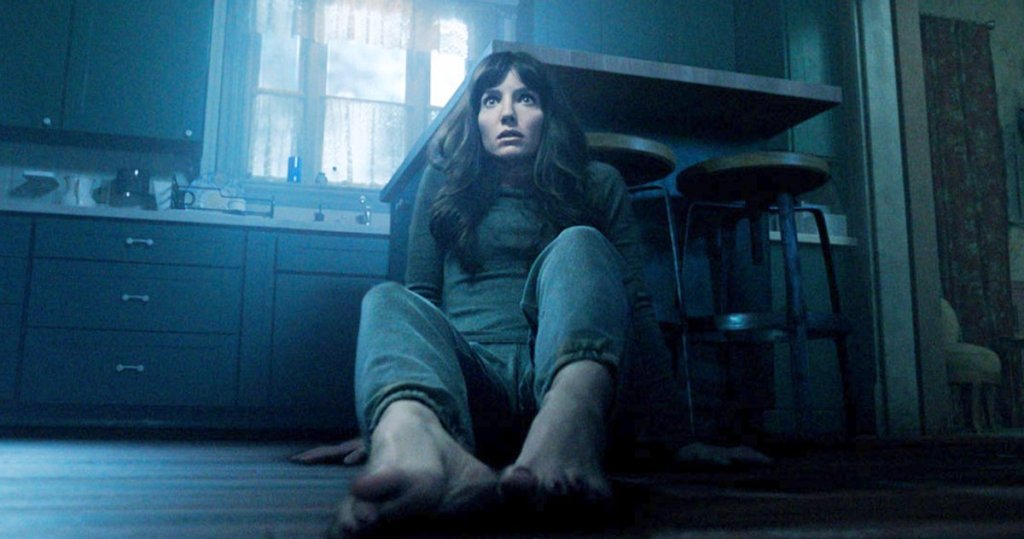
This issue of having a third act that will surely be the most remembered part of the film also can be seen as a disadvantage, as it can be difficult to pinpoint another moment that will stick in your mind after finishing the credits. Furthermore, by the end of Malignant, the most haunting thought in your mind can be that in the coming years we will be seeing some sequels, spin-offs or rip-offs that -though will not diminish the value of Wan’s film- will bring an eventual sense of repetitiveness to the horror genre, thus reducing its edge on the audience. Nevertheless, having the chance of enjoying a film that has a B-movie sense of fun, draws inspiration from the giallo -and even adds a little from the body horror genre as well- and still is produced by a giant studio is not something that we can see fairly often. Therefore let us enjoy this unhinged testimony of what James Wan can do before he returns to the world of Aquaman and we get submerged by a wave of copycats.
 The Neurotic Cinephile
You must be logged in to post a comment.