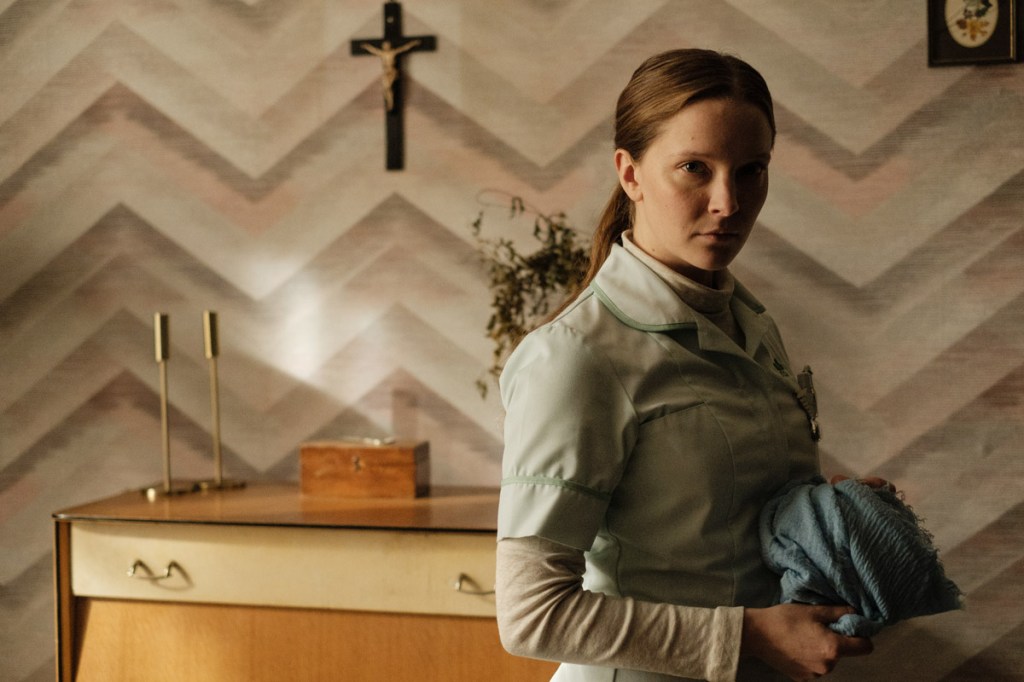
Saint Maud is a bone tingling, slow burner horror film in which Rose Glass -in her big screen debut- successfully applies elements of the genre to examine the abominable consequences of religious obsession by telling the story of a nurse, Morfydd Clark, who finds herself haunted by the idea of saving the soul of the woman she is looking after (played by Jennifer Ehle) before she passes away.
It is evident that Glass’s previous experience -she had written and directed several short films before debuting with Saint Maud– has allowed her to be confidently aware of what she is doing at all times. Not only its realistic settings, dark-ish environment, and lack of gimmicks, extravagant shots or unnecessary effects add to the story but also might bring to mind echoes of films like Jonathan Glazer’s Under The Skin, which in terms of comparisons is not a negative one by any means whatsoever. There is not a single thing that is out of place, Glass uses this minimal style in combination with the immersive sountrack for the better, and in the few moments in which a scene has to go the extra mile it does so without feeling out of place within the film. Nowhere is this more evident than in the fact that there are no superfluous jumpscares, as Saint Maud slowly, but surely creates a strong feeling of dread as a result of an increasing sense of unease.
Despite being around 83 minutes long, it never feels short, as the film does not waste any time and there are neither extra plot lines nor unnecessary characters that could drag the story. This is a result of a tightly written script -also by Glass- that always keeps the characters at the core of the story, as the relation between these two women, whose personalities and lives are extremely diverse, is essential to make Saint Maud the great film it really is.
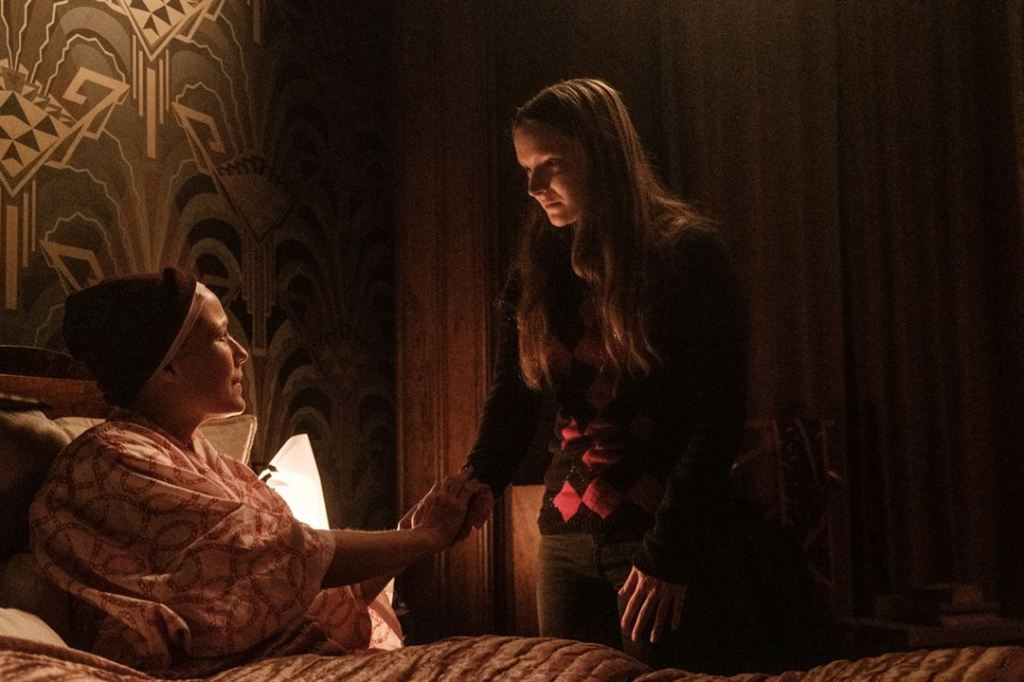
The contrast between the central characters serves to study the idea of remorse and losing your own sense of identity, as Ehle’s Amanda is a powerful indomitable woman who does not appear to have regrets about her life; whereas Clark plays a woman whose mind seems to be gone as a result of a traumatic event, living in a creepily decrepit apartment and whose sole purpose is to serve others as a way of running away from her past -for instance after she bumps into a former colleague, whose name happens to be Joy, she brushes off an offer of company-. The scenes between them, which constitute the backbone of the film, are filled with chemistry and engaging to see, as they play off of each other, creating not only some obvious tense moments, but also others that are slightly lighter and whose purpose is to alleviate the general tension of the film.
Both Morfydd Clark and Jennifer Ehle have captured the essence of their roles, making it difficult to imagine the film with other actresses. Despite not being on screen as much as Clark, Ehle -who plays a former dancer and choreographer- strikes a perfect balance between a person suffering from stage four lymphoma who, although is in a frail state, still refuses to let anybody see her with her guard down to the point of maintaining her social life, as a way of not accepting her unavoidable fate. However, if Ehle does a good job as the person who needs to be looked after by Maud, it is Clark who completely owns the film. She brilliantly handles the hard task of portraying a character as complex as Maud is. Her performance shows the nuances of a person who, after suffering the death of a patient has rejected her previous life, changed her name from Katie to Maud in the process, turned to religion and become a devoted Catholic. Clark dissappears in the film by blending Maud’s detachment from reality and the dark consequences of religious devotion with the ecstasy and passion she feels when she prays and senses God’s presence. While it is certain that she has a bright future ahead of her, it is also obvious that she will be remembered thanks to her role in Saint Maud, as we keep in our minds masterful performances like Sissy Spacek’s Carrie, Isabelle Adjani in Possession, Linda Blair in The Exorcist, Barbara Hershey in The Entity or Kathy Bates in Misery.
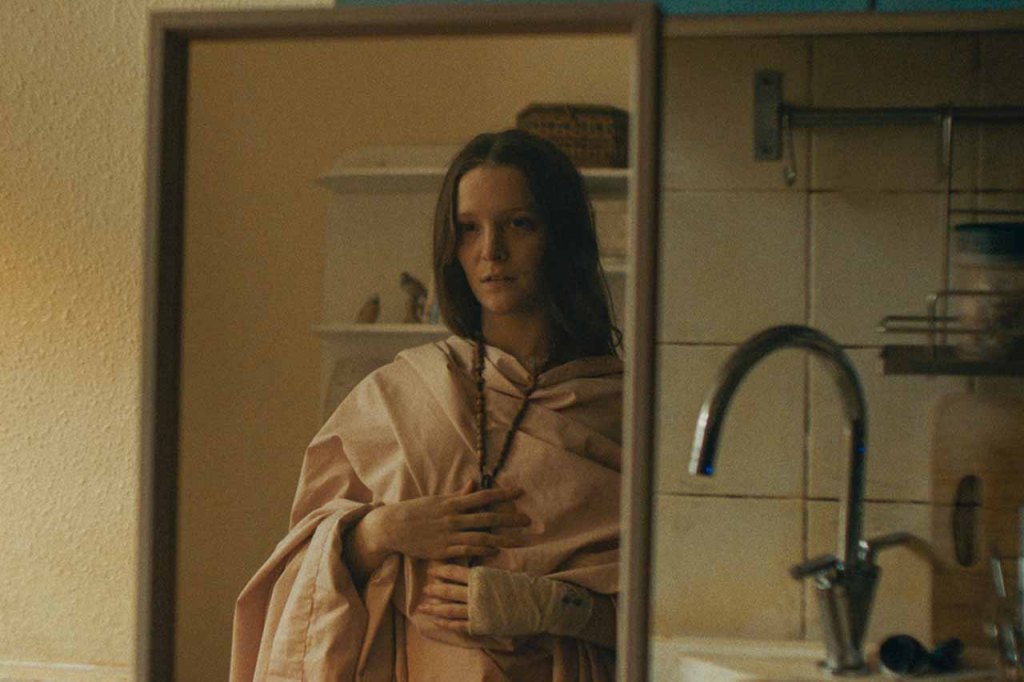
Thanks to the work of Clark and Ehle in front of the screen and Glass’ fearless zest behind the camera, the film never loses its initial intensity, holding its strength until the denouement, culminating with an electrifying ending that feels well earned and completely in line with the main story instead of forced and shocking just for the sake of it. Provocative, memorable, and visually impressive, Saint Maud is one of those rare films in which is difficult to find a flaw; an impressive debut from Glass as everything has been tightly put together and designed to work in conjunction with talent that foreshadows a brilliant career.
 The Neurotic Cinephile
You must be logged in to post a comment.