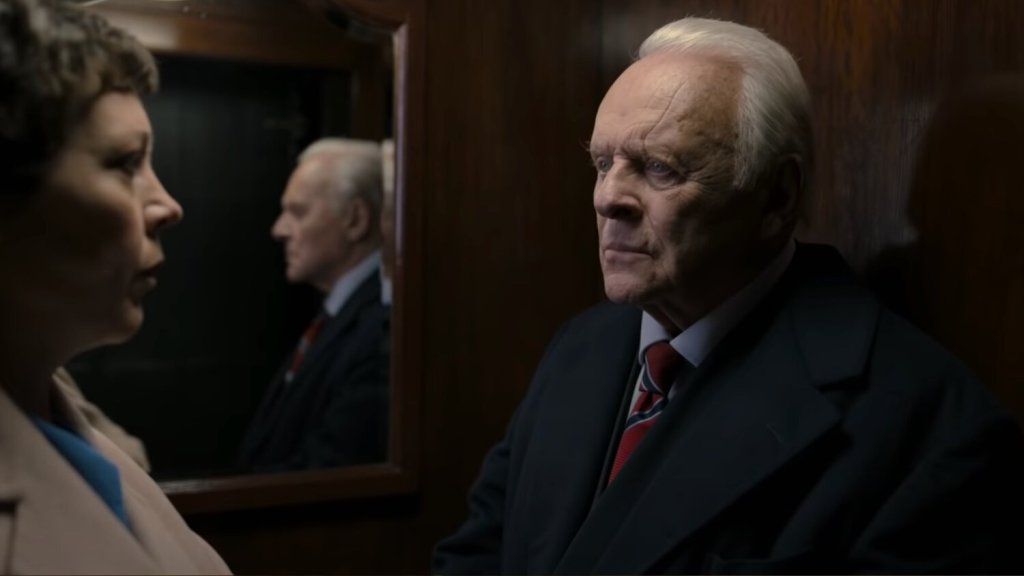
Thirty years ago, Anthony Hopkins won his only Oscar for Best Actor -despite being on screen only a mere 16 minutes- for his chilling portrayal of the inhuman cannibalistic killer Dr. Hannibal Lecter in Jonathan Demme’s The Silence of the Lambs. This year, Hopkins -who has just won a Bafta for Best Actor- is again nominated for an Academy Award for his performance of a man who refuses assistance despite the fact that he is starting to lose connection with his life, his daughter -played by Olivia Colman- and his own mind in The Father, directed and co-written by Florian Zeller.
It is not an easy feat to say that Hopkins’ performance in The Father is one of his best ones, as the Welsh actor has a lengthy and memorable career with roles as diverse as his aforementioned Hannibal Lecter and his portrayal of a butler in The Remains of the Day. Furthermore, throughout his career, Hopkins has brought to the big screen several real life figures in films like The Elephant Man, Nixon, Surviving Picasso, Amistad, Hitchcock or The Two Popes to name only a few of them. Nevertheless, what could be said about Hopkins’ acting in The Father is that he manages to convey all the emotional changes his character is going through in a way that seems to blur the line between reality and fiction, as it might make you wonder if he is drawing all of that from his own personal experience -an idea that is supported by the fact that his character’s name is also Anthony and he also states his very own date of birth in the film, as Zeller wrote the character with Hopkins in mind-.
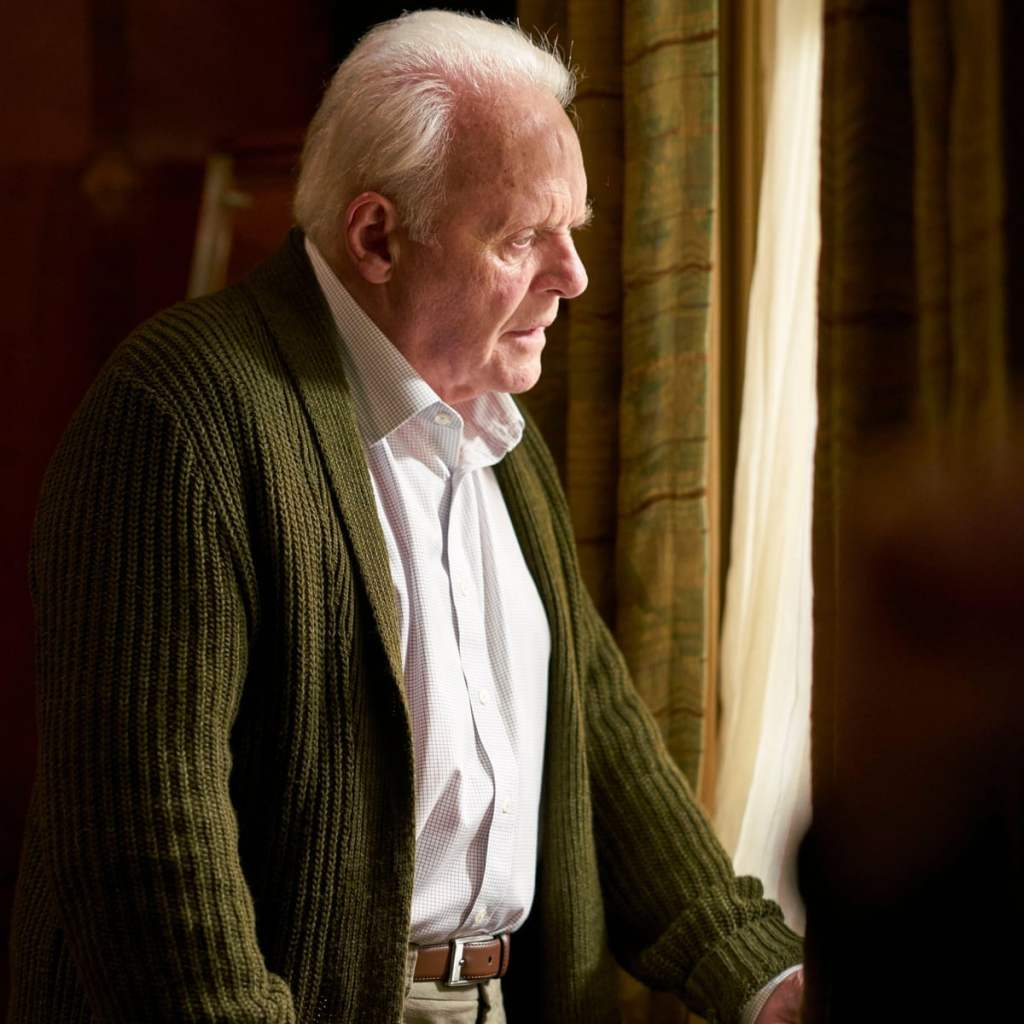
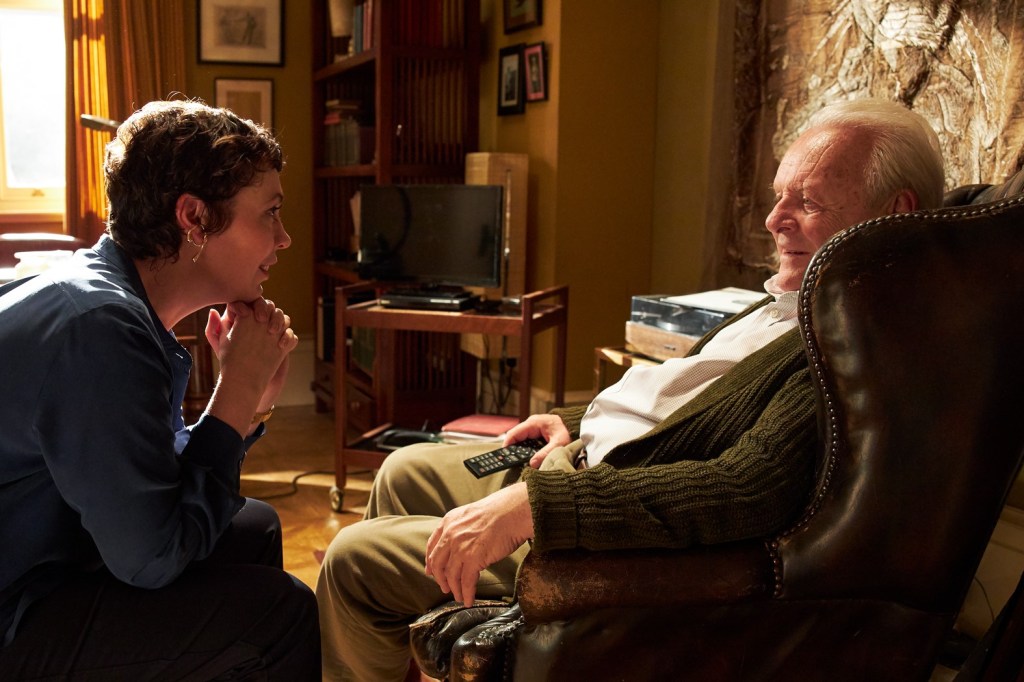
What Hopkins has achieved with his performance of a man who is unaware of the fact that he is losing grip with reality and those around him, is capturing that fragility in a way that feels real and relatable, perhaps more so since the film does not seem to keen on spending time in those scenes whose sole purpose seems to be getting the attention of Oscar voters. Hopkins’ energy and skills are as sharp they have always been, allowing him to give a masterfully humanistic acting class from the first moment he appears on screen until the end. In addition, Hopkins is gracious enough to chew all the scenery but also leaving room for other actors to shine beside him, and the one that makes the most of it is the great Olivia Colman -together, they might make you forget that Imogen Poots, Olivia Williams, Rufus Sewell and Mark Gatiss also share the screen with them-, who brings her talent to her compassionate character of the long-suffering daughter. However, if there is a niggle to be had, it is found in the scenes in which the film focuses only on Colman’s character, as it is in those moments -albeit necessary to develop her character and understand how the situation is affecting her- when the film loses a bit of steam and wanders into a slightly more familiar territory.
Despite this, it is clear that Zeller knows the talent he has in front of the camera, as his style is never intrusive and he stays away from any kind of fancy stylistic tricks that might distract from what is happening, thus allowing his actors longer scenes with enough room to perform. Although this is his big screen debut, he moves with the ease of a more seasoned director, shooting a range of elegantly framed shots -achieved in conjunction with a great cinematography by Ben Smithard and edit by Yorgos Lamprinos-, which he uses as a way to put the audience in the shoes of the central character, thus making the experience of watching the film an active extension of what Hopkins’ character is going through, reinforcing the connection between the viewer and him. The fact that The Father has a theatrical origin -as it is an adaptation of one of Zeller’s own plays- is never a problem, as Zeller makes the most of the -almost- unique location replacing any feeling of lack of movement with a sense of domesticity and familiarity that elevate the flat from a possible macguffin to an entity almost as important as one of the central characters.
Heart-wreanchingly beautiful and enduring, The Father is not only a great film as a result of the combination of Hopkins’ superb performance, a well written script by Zeller and Christopher Hampton -who have just received a Bafta for Best Adapted Screenplay- , and a powerful, yet subtle, non intrusive direction -reinforced with a score by Ludovico Einaudi (in combination with other classic pieces)-; it is a masterful film, also due to the fact that Zeller never aims to dwell on the tragedy. His intention is nothing but to explore the real consequences of a devastating condition from a human point of view, and that allows for a more meaningful impact, as sometimes it might make you feel as you are not watching a film, but a truthful echo of what it really is to suffer from the consequences of losing your mind as well as what it means for those who have to look after their elder relatives, making it impossible not to be overwhelmed by emotions.
 The Neurotic Cinephile
You must be logged in to post a comment.