To put this review of Peter Strickland’s In Fabric into perspective, we should stop for a moment to consider the current situation in which the horror genre finds itself. In the last few years there has been an increasing number of films that are built around a very simple pattern: things are quiet… the music indicates that there might be something creepy around the corner. Character turns the corner. Nothing there. Silence. The camera changes perspective. Nothing. Then, BANG, THERE IS YOUR SCARE!!! Nothing happens after, as we are only twenty minutes into the film, it is only an illusion. Repeat over and over until the credits roll, thank you very much.
So, thanks to this over saturation of flimsy horror films, more dedicated to constantly scare easily frightened audiences than to create a tense atmosphere of dread, it has become harder for fans of the genre to find something that can echo films such as The Exorcist, The Thing, The Shining, Evil Dead, The Possession, The Fly or Don’t Look Now.
Taking aside the cases of Get Out and Us -both of them, especially the former, unexpected hits with critics and audiences alike-, it can be seen that other beacons of light in the horror genre -e.g. Midsommar, Hereditary, The Babadook or The VVitch-, have only succeeded from a critical standpoint, as none of those films can be considered as a huge commercial success. Of course, quality is much more important than box office results, although the main issue is that, due to their reduced profitability, films in the vein of those directed -respectively- by Ari Ester, Jennifer Kent or Robert Eggers are sadly scarce.
Films like Midsommar and The Babadook avoid cheap tricks like the over-reliance on jump scares, provoking fear as a result of being built around a powerful central concept and an environment which becomes more and more claustrophobically frightening and grim as the plot moves forward. The result is that the audience can feel the pressure of the increasing terror developing in front of their eyes, as well as the feeling of watching a set of well drawn characters with whom it is easier to establish the necessary identification to be concerned for their lives.
Nevertheless, the fact that big studios have -somewhat- turned their backs on this kind of horror films could be seen as a blessing in disguise, as this has allowed filmmakers to focus on the essential elements that make a story scary. Among the examples of small horror films in which the limitations of a tighter budget are exploited to their advantage we can find Neil Marshall’s The Descent, Ben Wheatley’s Kill List and A Field in England and Peter Strickland’s Barberian Sound Studio and In Fabric, film which is as difficult to describe, as it is an enjoyable feast for your eyes.
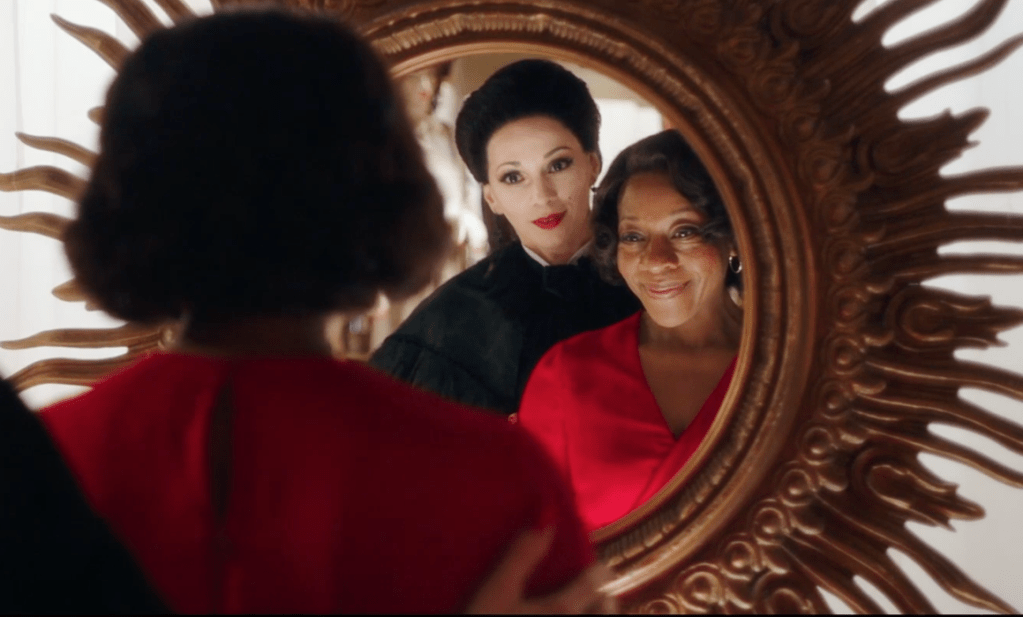
Mixing suspense, horror and adding a dash of humour peppered throughout, In Fabric is centered around the character of Sheila -played by Marianne Jean Baptiste-, who lives with her son and his girlfriend -Gwendoline Christie-. It is clear from the get-go that Sheila is a woman used to live without drawing too much attention upon herself. She has a tense relationship with her son’s girlfriend, is coping with her life after her divorce and does not seem to be satisfied at her job.
When Sheila arranges a blind date with a man, brilliantly named Adonis Jackson, she reaches the conclusion that she needs some clothes that can make her look more enticing for him. As her wardrobe is filled with her boring, formal clothes, all of them in subtle and discreet, she goes to a shopping centre and ends up purchasing an exuberant red dress.
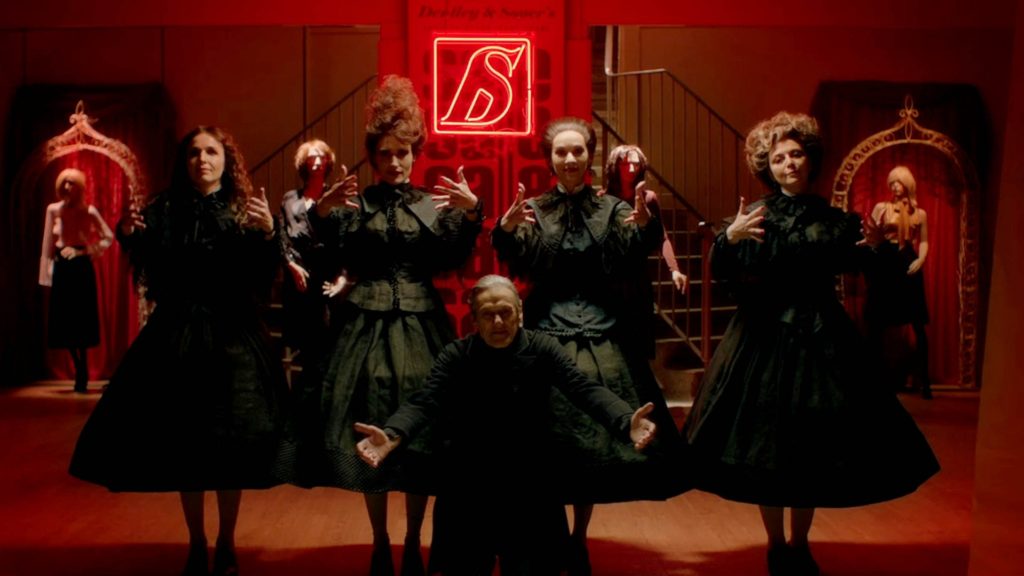
It is at this point in the narrative when the film finds its central strength. Choosing a creepy shopping centre as its central location, allows In Fabric to blend together a slight criticism to consumerism, the world of fashion with the unfulfilled lives of its central characters, not only that of Baptiste’s, but also the lives of the roles played by Hayley Squires and Leo Bill.
The affected shop assistants -who seem to be distant relatives to the dance instructors in Suspiria– are embodiments of the emptiness of the fashion industry, duping people into thinking they need to update their wardrobes every season, thanks to their use of highly elaborated sentences perfectly designed to confuse and convince their clients, turning them into mindless people consumed by consumerism.
Strickland, however, does not seem to be interested on being sanctimonious to its audience. In Fabric is not a film whose main aim is to make people change their minds about the banality of the fashion industry; it seems to be built around the exploration of people who have been devoured by their biggest desires, the film just does so by putting at the centre of it a strangely evil red dress.
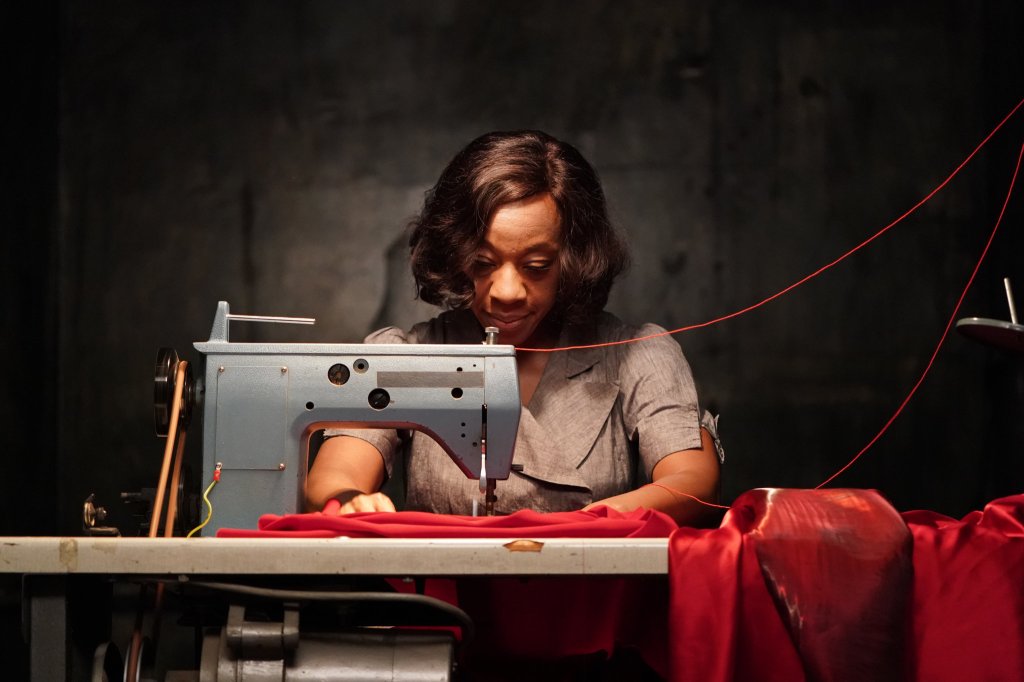
Strickland has managed to design a scary film that is not dependent of being constantly scaring its audience. In In Fabric everything -from the actors, soundtrack, sound design to the editing or the cinematography- works efficiently together to create an atmosphere that grabs you and squeezes you more and more, whilst you never want to look away, awaiting the next unexpected turn of the story.
Clearly inspired by old Giallo films and with a knack for offbeat comedic moments, Strickland has managed to craft a film that plays around ideas like desire and obsession, avoiding predictability at all costs, giving a whole new meaning to the idea of a fashion victim.
 The Neurotic Cinephile
You must be logged in to post a comment.