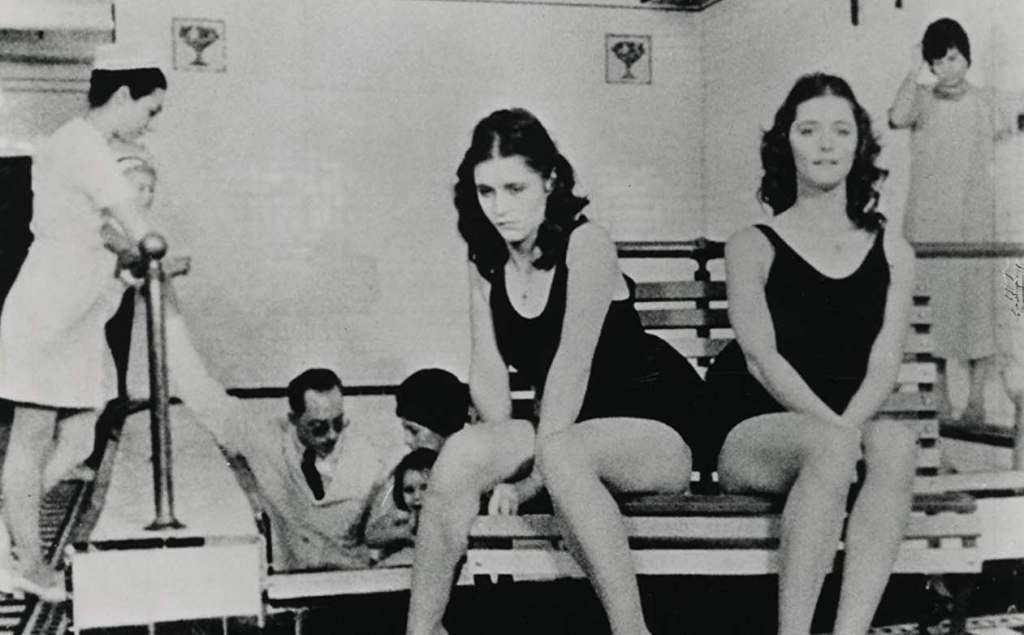
Several weeks ago, when Ben Wheatley’s Rebecca was released, I kept thinking about about Alfred Hitchcock’s legacy and how his films have perdured with the passing of time, influencing countless generations of filmmakers, being Brian de Palma one of his most clear admirers, as it is evidenced with plenty of nods and homages to the master of suspense throughout his filmography.
One of the earliest examples of those films is 1972’s Sisters, in which Margot Kidder plays a woman, whose life is influenced by her formerly conjoined twin sister -now separated-, who finds herself accused of murder by a local reporter -Jennifer Salt-. Elements popularized by Hitchcock such as the use of a split screen, the theme of voyeurism are used wisely in Sisters creating a suspenseful atmosphere in which no matter what side you are on, as the tension is so palpable that it might be said it escapes the screen.
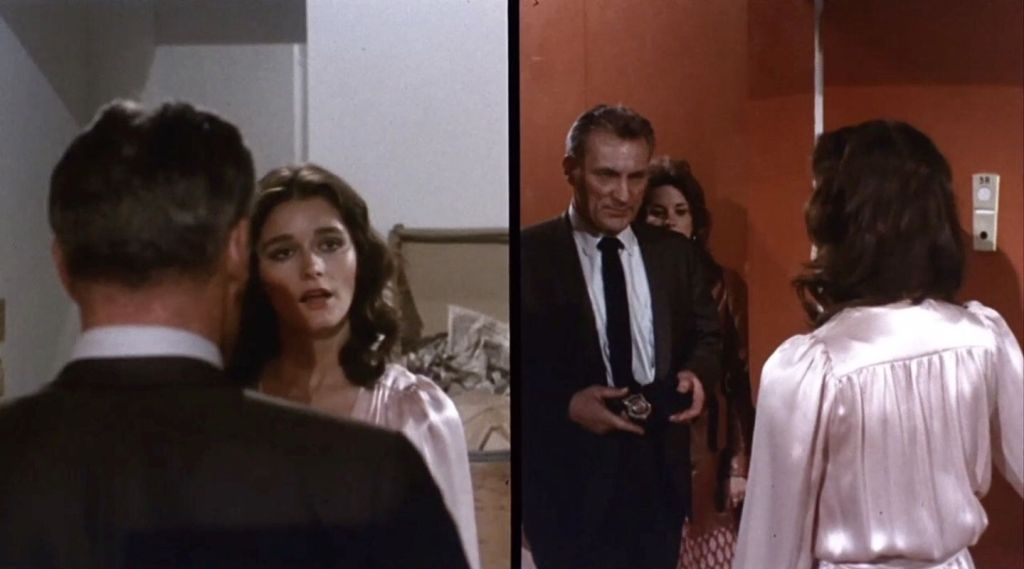
However, de Palma went one step further homaging the master of suspense himself. Firstly by recruiting Bernard Herrmann (composer in films like Vertigo, North by Northwest or Marnie) who -despite being almost retired at that time- managed to create a soundtrack that would not sound out of place in some of his previous collaborations with Hitchcock. Furthermore, key references to films like Rope, but most notably Rear Window and Psycho are peppered throughout Sisters.
In the case of the 1954 classic, de Palma paid homage to it by centering a couple of key scenes -one in which the reporter witnesses the crime and another in which the private detective has secretly entered Kidder’s apartment looking for clues- in which the audience watches the events from the distance and from the point of view of the voyeur, fearing a possible discovery and its terrible repercussions in the same way that James Stewart watched Grace Kelly entering the house of the killer in Rear Window.
With regards to Psycho, one of the most noticeable homages to that film is the fact that, as Hitchcock did with the character of Marion Crane -superbly played by Janet Leigh- de Palma -who co-wrote the script with Louisa Rose- challenges audiences’ expectations. Firstly by killing one of the -supposed- main characters earlier in the story and then, by playing with different points of view and shifting from one character to another, opening the perspectives of the story as a result.
The fact that the story is centered around a character that might be the villain of the story, or closely related to said character, not only traces the film’s roots to Psycho, but also to a film which also premiered on the same year -1960-, but without the fanfare and critical success of Hitchcock’s masterpiece. Twelve years before the release of Sisters, audiences had the chance of being terrified with a perfect trifecta of influential films that created a shockwave in the horror genre still visible nowadays: the aforementioned Psycho, Georges Franju’s Les Yeux sans Visage and last but not least, Michael Powell’s Peeping Tom.
While Psycho became Hitchcock’s biggest success and is widely considered as one of the most relevant pictures of the XXth Century, Peeping Tom was surrounded by scandal and was quickly pulled from cinemas, damaging the career of Powell in the process -although years later the film gained the reputation it deserves, thanks in part to the efforts made by one of its most fervent admirers, non other than Martin Scorsese-.
Nevertheless, while both films are successful exploration of similar themes and allowed audiences to be on the perspective of a killer, having a first hand horrific experience in the process, it could be argued that it was Powell who explored this concept in greater detail as the killer in Peeping Tom actually uses a modified camera as a tool to kill his victims and record them at the same time, meaning that the audience has a first row ticket to watch those hideous acts take place.
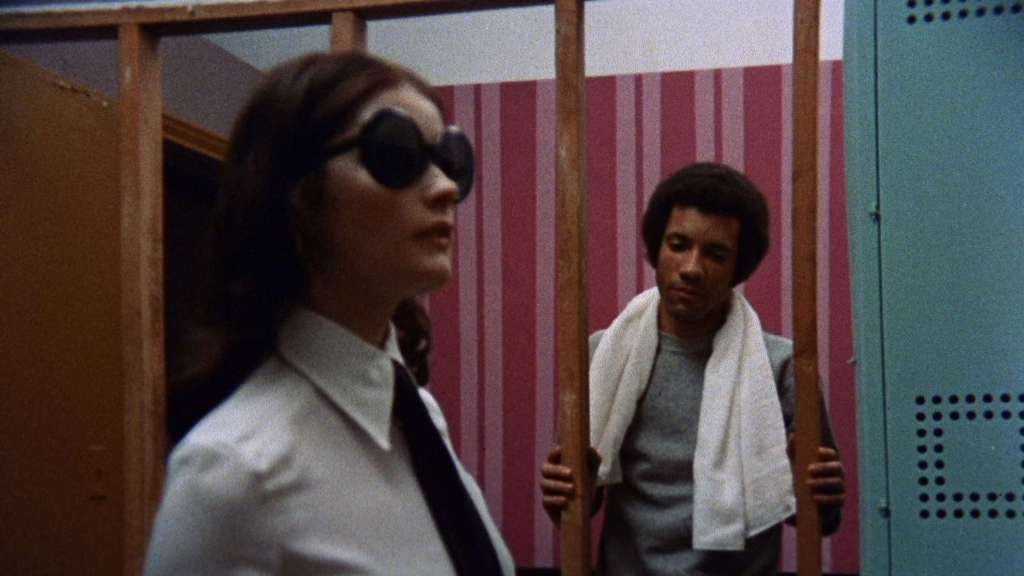
Nevertheless, the idea of secretly watching whilst being unable to move your eyes away when something is happening in front of them is explored wisely and widely by both directors as well as by de Palma, who even from the earlier scenes of Sisters shows us the character of a man -played by Lisle Wilson- who finds himself as the victim of a prank in which a woman -Kidder- is supposedly involved without her knowledge. Once it is revealed that we are watching a real show, and the two characters appear on screen fully aware of the prank, we discover that the show itself is titled Peeping Tom.
It would not be a surprise to think that de Palma chose that title for the show as a nod to Powell’s film, however, it is remarkable to see how the conceit of watching “the other”, which is central for Sisters is explored from the very beginning of the picture. Furthermore, it should be mentioned that, while Sisters is a highly watchable thriller, it is not one that plays by conventional rules, as the flashbacks of the operation in which the twins were separated, seem to be the result of mixing Tod Browning’s Freaks with a dash of Les Yeux sans Visage and a little bit of Thomas Eakins’ painting The Gross Clinic.
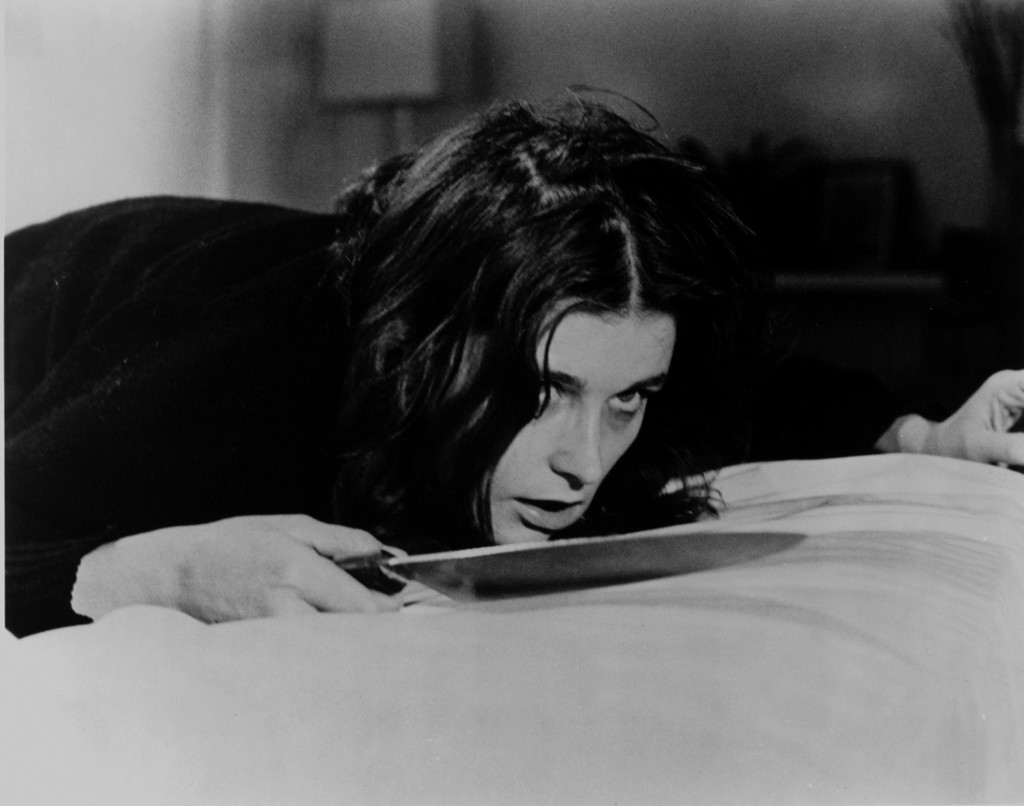
Aside from the many compliments that could be given to de Palma, Sisters has what might be unequivocally considered as Margot Kidder’s best performance by far. Although more popular for her turn as Lois Lane in Superman, together with Christopher Reeve, and 1979’s The Amityville Horror, Kidder commits herself 110% to the role, managing to convincingly portray a wide range of emotions as diverse as purity, fear, anger, love, madness. It is extremely sad, not only to see how she did not have a more memorable career but also to discover that Kidder was diagnosed with bipolar disorder in 1988, an illness which might have permeated in her tour de force performance.
While Sisters might not be de Palma’s best film, thanks to the combination of the electrifying nature of the story, his directorial skills and Kidder’s performance, it is propelled forward in an organic progression that never lets room to breathe, making it not only an extremely joyous and rewarding viewing experience, but also a solid exercise of filmmaking by someone who clearly knows what he is doing and is not shy to pay homage to his greatest influence, Alfred Hitchcock.
 The Neurotic Cinephile
You must be logged in to post a comment.