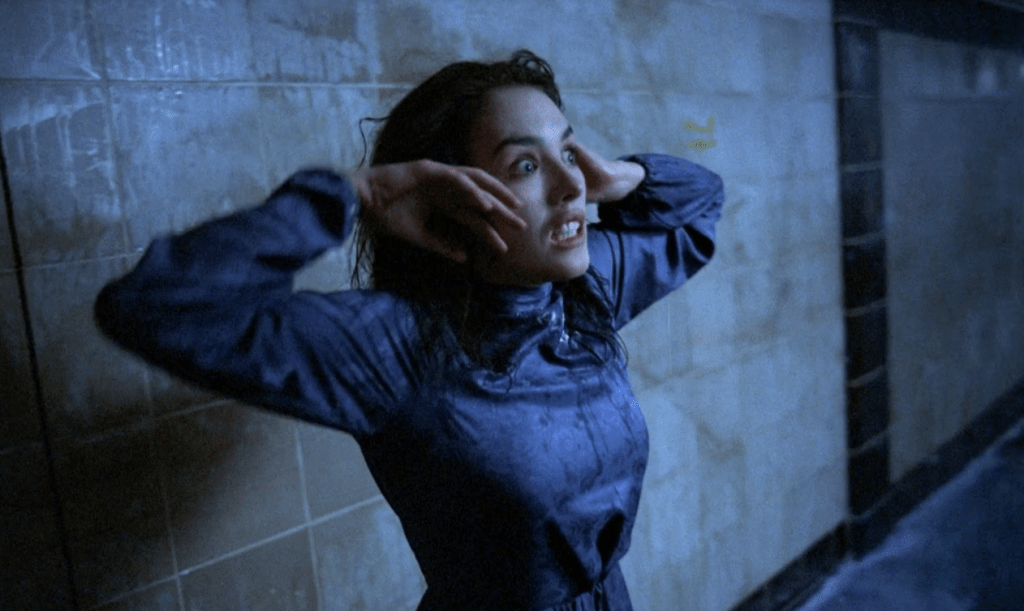
As I have grown older I have found myself that, despite being a devoted fan of the horror genre in and on itself, more often than not I seek those films that are not reliant on scares and excessively violent images. I have to admit that, although I have no problem whatsoever watching a film in the vein of Hellraiser, I have become more interested on those kinds of films that can make you feel unease as a result of an atmosphere that becomes more and more claustrophobic as the feeling of dread invades your mind for the days and weeks to come.
Lars Von Trier’s Antichrist, Darren Aronofsky’s mother! and Ari Ester’s Midsommar and Hereditary happen to be examples of film that leave their audience sweating in their seats, unable to breathe due to some of the things that have seen, are sadly exceptions to the rule. Apart from being rare exceptions in a sea almost filled by repetitive scary films too-reliant on jumpscares, they have another thing in common, which is that their roots can be traced back to films like Roman Polanski’s Repulsion, David Cronenberg’s The Brood and Andrzej Zulawkski’s Possession.
Even some time after having suffered quite a painful breakup, I have to say that I felt slightly reticent towards the idea of watching Zulawkski’s film, as at the core of the story we find a couple -magnificently played by Isabelle Adjani and Sam Neill- in the midst of a less-than-peaceful separation and although the consequences of said breakup are central to the strength of the film, it is not fully dependent of this storyline. However, despite the fact that one of the key conceits of the film is the couple’s divorce, it would be almost impossible to analyze the plot and central ideas of a film like Possession.
It is true that some of the plot is focused on the outcome of a breakup between the characters played by Adjani and Neill, however the script -co-written by Zulawski and Frederic Tuten- uses the issue of the couple’s divorce to delve into personal topics for Zulawski himself -as he had also been through a difficult divorce prior to the film- and had to move away from his native Poland to continue pursuing his career as a filmmaker.
By setting the film on a still divided Berlin, Zulawski masterfully uses the location to his advantage in order to explore further this motif of a divided existence, as he creates a contrast between the two homes inhabited by Adjani’s character. It does not matter that, after leaving her husband and son behind, she moves from a modern and comfortable apartment to one where she seems to be hiding, which is a derelict flat covered by filth, as in both addresses we are painfully close to the Wall that splits the German city.
Furthermore, in addition to all of those conceits, in Possession we are also able to delve into the motive of the doppelgänger and an unexplainable (and unexplained) demoniacal possession by a hideously looking and revolting creature as well.
It goes without saying that Possession is not a film that could easily be explained, which means that it is fully open to interpretation -to the extent that for its distribution in the US it was shortened to 80 minutes and heavily edited, making it even more incomprehensible in the process as some scenes were played in a different order-.
However, despite all of those dissimilar conceits taking place simultaneously, Zulawski managed to create with Possession a cohesive film that stands the test of time on the basis that once you have seen it, it creeps into the inner corners of your mind and stays there sine die.
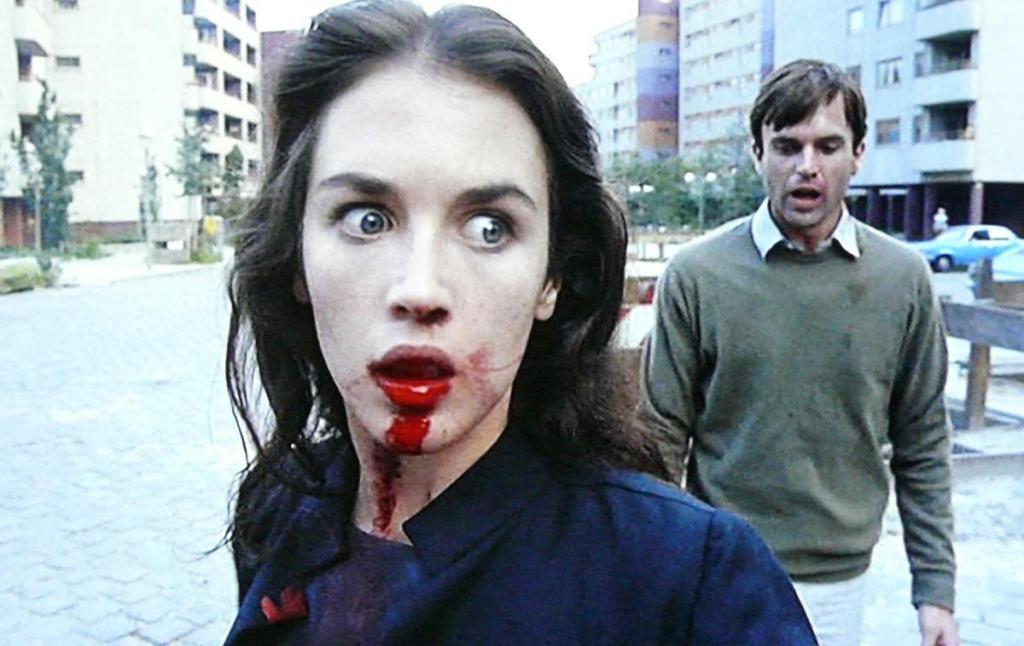
In addition to Zulawski’s merits, credit should be given to Sam Neill and Isabelle Adjani. Both the former and the latter superbly handle whatever the script throws at them, but it is Adjani’s performance which deserves a special mention, as she shines in some of the most memorable -and jaw droppingly bizarre- moments of the film.
Without giving too much away for those out there who still have not seen Possession, the moments in which a -particularly gross- sex scene and a maddening miscarriage take place should be singled out, as then you have nothing else to do but to open your eyes as wide as possible in amazement as you try to grasp the level of commitment and talent that Adjani demonstrates.
Haunting, gory, shocking and unpredictable, Possession is a dread inducing, cryptic art house (of horrors) film that will stay with you way after you have seen it, making you feel slightly unease for what you have seen, but consciously complicit, as you could not take your eyes off the screen for even a second.
 The Neurotic Cinephile
You must be logged in to post a comment.